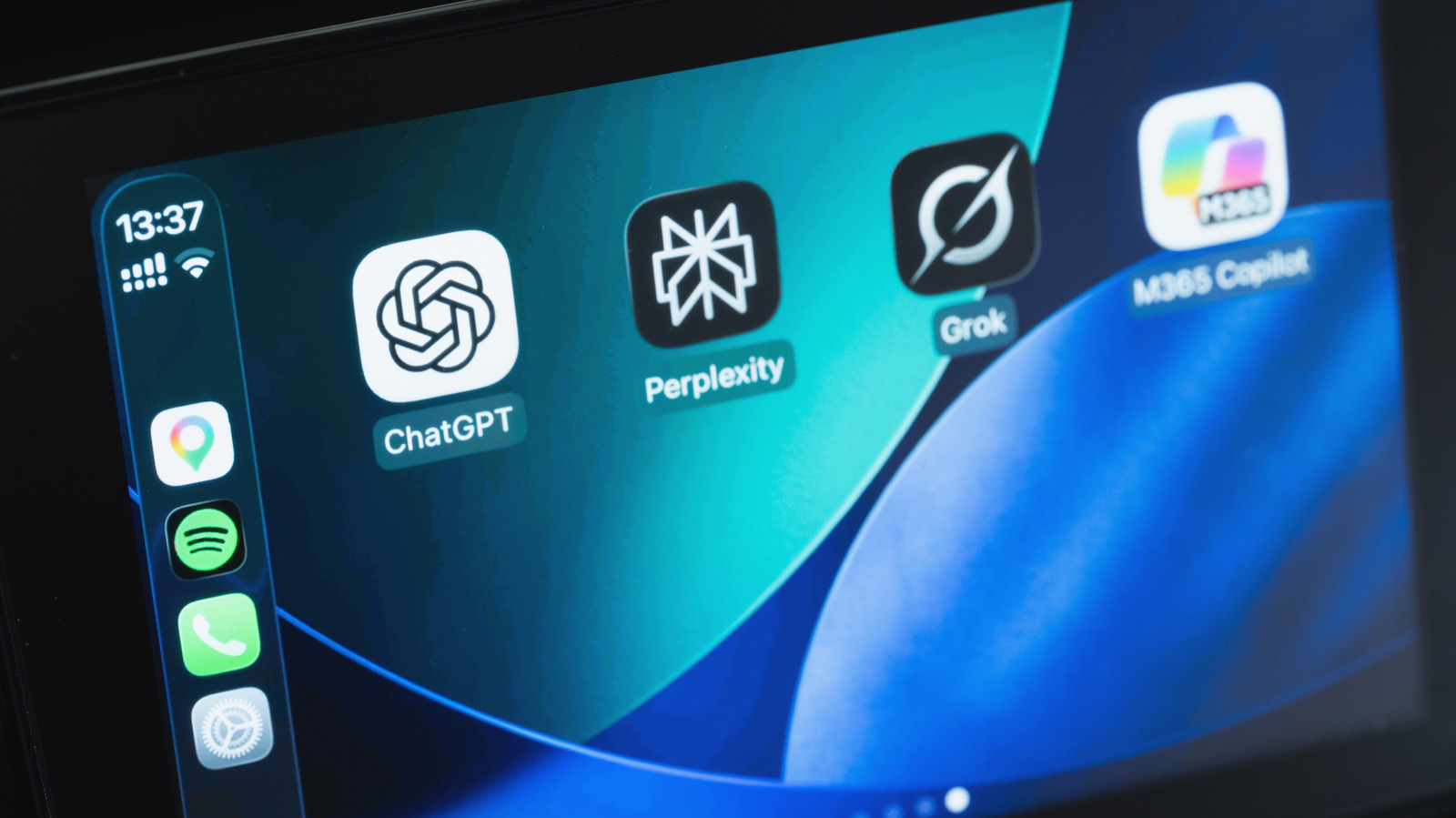
Apple's iOS 26.4 update, released in September 2026, adds a new CarPlay-specific API that surfaces several third-party AI chatbots on the infotainment screen. The rollout makes it possible to launch ChatGPT, Claude, Perplexity, Meta AI, xAI's Grok, and, on iOS 27, Siri AI directly from the CarPlay home screen. While the headline-grabbing announcement suggests a major shift toward conversational AI in vehicles, a closer technical inspection reveals a feature that is functionally narrow and potentially hazardous.
API Mechanics and Immediate Availability
The CarPlay API introduced in iOS 26.4 is a thin wrapper around existing iOS voice-interaction frameworks. Developers must package their chatbot UI as a CarPlay-compatible scene, then register voice intents that trigger when the user taps the app icon. No wake-word activation is provided; users must manually open the app before speaking. This design choice sidesteps Apple’s strict safety guidelines, which prohibit background voice activation that could distract drivers. Consequently, the user experience mirrors launching a traditional app rather than a hands-free assistant.
Supported Bots and Their Technical Constraints
All listed bots operate in a voice-only mode. When a user selects "New Voice Chat" in ChatGPT, the app streams audio to OpenAI’s servers, receives a text response, and reads it back via text-to-speech. The same pipeline applies to Claude (Anthropic) and the others, with each vendor handling inference on cloud GPUs. No on-device model execution is offered, meaning latency depends on cellular connectivity and server load. The lack of local inference also raises data-privacy concerns; conversational logs traverse the same networks used for navigation and streaming, potentially exposing sensitive information.
Safety and Usability Trade-offs
From a safety engineering perspective, the requirement to open an app before speaking adds friction. Drivers must glance at the CarPlay screen, a behavior Apple explicitly discourages in its Human-Machine Interface (HMI) guidelines. Moreover, the bots cannot control vehicle subsystems—no climate, media, or navigation commands are exposed. This limitation reduces the practical benefit to a novelty conversation partner, rather than a functional co-pilot.
Microphone quality further constrains reliability. CarPlay relies on the vehicle’s built-in mic array, which varies widely across manufacturers. In high-noise environments (e.g., highway speeds, open windows), speech-to-text accuracy drops, leading to repeated clarification cycles that increase driver workload. The source article notes that users may need to close windows or park to achieve acceptable performance, underscoring the mismatch between the technology’s expectations and real-world driving conditions.
Comparative Landscape: Siri AI vs. Third-Party Bots
Apple’s own Siri AI, introduced with iOS 27 and limited to iPhone 15 Pro or later, integrates with Apple Maps and can issue navigation prompts. This deep system integration contrasts sharply with third-party bots, which are sandboxed and lack access to location services. The distinction highlights a strategic divergence: Apple is positioning Siri as the only voice assistant capable of true vehicular assistance, while third-party offerings remain peripheral.
Market Implications and Developer Ecosystem Shifts
The CarPlay API may entice AI startups to prioritize iOS compatibility, potentially shifting a portion of the mobile AI market toward Apple’s ecosystem. However, the absence of vehicle-control APIs limits the incentive for deeper integration. Developers seeking to embed AI in automotive contexts will likely look to platforms that expose CAN-bus or OTA update interfaces, such as Android Automotive or proprietary OEM SDKs. In that sense, Apple’s move could be interpreted as a defensive play to retain relevance in the infotainment space rather than a genuine expansion of in-car AI capabilities.
Regulatory and Liability Considerations
Regulators in the EU and US have begun scrutinizing voice-activated systems for distraction risk. The European Commission’s “In-Vehicle Voice Assistant” guidelines, published earlier in 2026, require that any system activated while the vehicle is moving must not require visual interaction. By mandating a tap to launch the chatbot, Apple’s implementation technically complies, but the subsequent conversational flow may still violate the spirit of those rules if drivers are compelled to look at the screen for error messages. Liability exposure could increase if a driver misinterprets a bot’s suggestion as actionable advice (e.g., asking for a restaurant recommendation that leads to a detour).
What to Watch Next
Future iOS releases may address the wake-word limitation, especially if Apple introduces a secure sandbox that permits background voice activation without compromising safety. Additionally, the rollout of on-device LLM inference—rumored for iOS 28—could reduce latency and privacy concerns, making CarPlay chatbots more viable. For now, the feature serves as a proof-of-concept rather than a transformative driver aid.
Practical Guidance for Users
If you own a CarPlay-enabled vehicle and wish to experiment, ensure your iPhone runs iOS 26.4 or later, update all chatbot apps via the App Store, and configure the CarPlay layout under Settings > General > CarPlay. Expect voice-only interaction, no wake-word activation, and limited functionality beyond casual conversation. Keep a stable cellular connection; weak signal will cause the bots to drop out entirely.
Bottom line: Apple’s CarPlay API brings popular AI chatbots into the car, but the implementation’s voice-only, non-integrated design curtails real utility and may introduce safety and privacy trade-offs. The move signals a strategic foothold rather than a functional breakthrough, and developers and regulators will be watching closely for the next iteration.
Related coverage
- Google TV and Apple Remote Features Turn Phones Into Universal TV Remotes
- Smart TVs Benefit from Standby Mode with Faster Boot and Panel Care
- Guide to Samsung side button customization on Galaxy phones