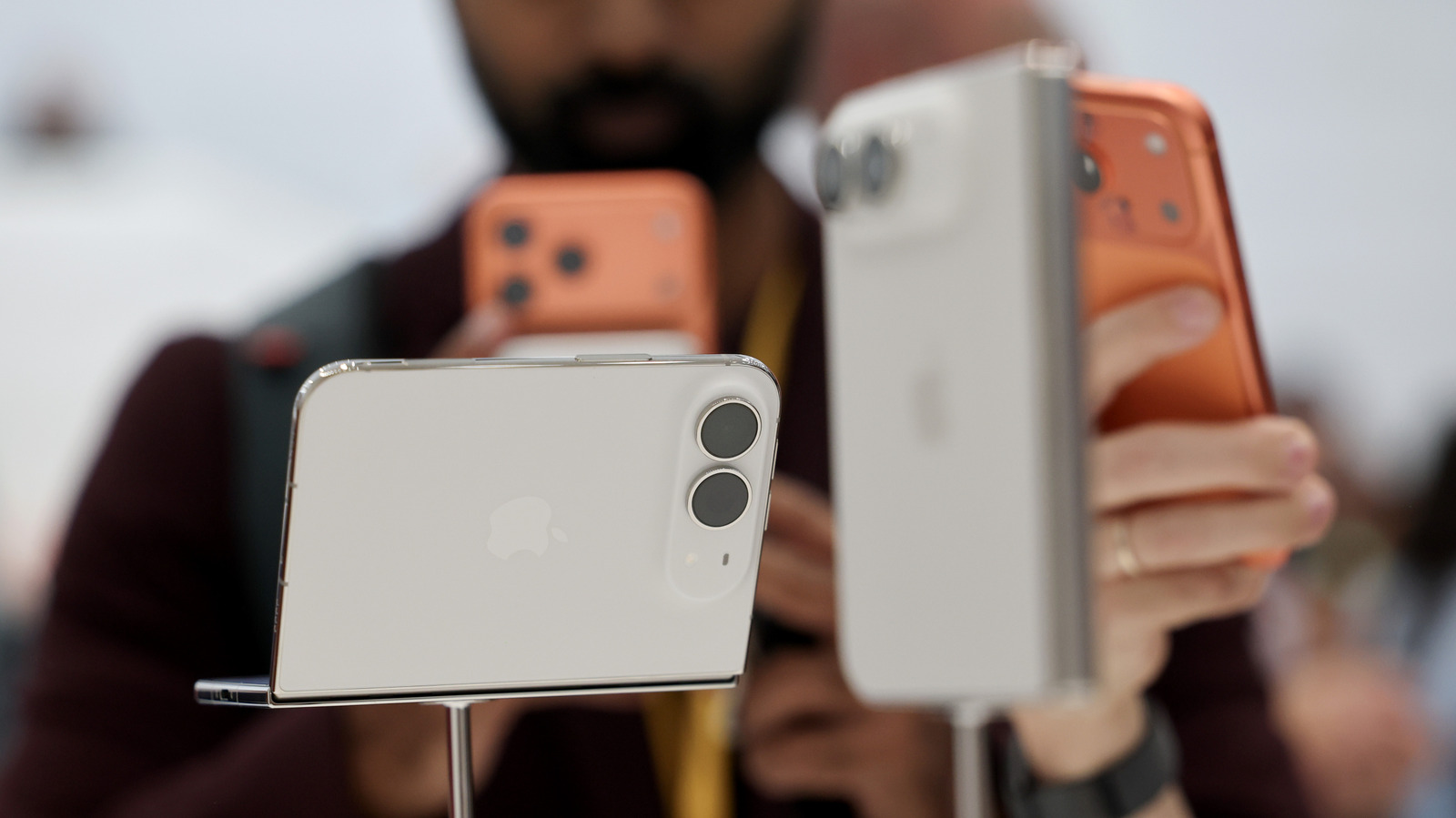
Apple unveiled iPhone Handoff as part of iOS 27, a carrier-level feature that lets two iPhones share a single mobile number and eSIM profile. The announcement, first hinted at WWDC and detailed at the September 9 Surprise and Shine event, marks the most seamless dual-device experience Apple has offered to date. T-Mobile (US) and Telekom (Germany) are the only carriers that have publicly confirmed support, with T-Mobile adding a $5 monthly surcharge for the service.
Technical Overview of iPhone Handoff
- Dual-device number sharing: Both phones operate under one MSISDN, routing voice and SMS through the primary device’s eSIM while allowing the secondary device to place and receive calls via the same number.
- iCloud synchronization: Calls, messages, and supported third-party app sessions are mirrored through iCloud, eliminating the need for separate provisioning.
- Wi-Fi prerequisite: Devices must reside on the same local network, ensuring low-latency handoff and secure handshaking via Apple’s proprietary authentication tokens.
- eSIM flexibility: The primary iPhone retains the carrier-issued eSIM; the secondary can host its own eSIM from a supported carrier, but both must be on the same carrier plan for full functionality.
The architecture relies on Apple’s existing Continuity framework, extending the handoff protocol from macOS/iPadOS to a second iPhone. Encryption keys are exchanged over the local Wi-Fi using the same end-to-end security model as FaceTime and iMessage, preserving carrier-grade privacy.
Setup Procedure and User Experience
- Proximity requirement: Place the two iPhones side-by-side and unlock the primary device.
- Settings navigation: Open Settings → Cellular, tap Set Up Cellular/Add eSIM or iPhone Handoff if a number already exists.
- Number assignment: Choose Use Number on This iPhone and Another, confirm the primary device, and follow the on-screen prompts.
- Dynamic Island indicator: Once active, a subtle badge appears beneath the Wi-Fi icon, confirming Handoff status.
After configuration, the user experience is indistinguishable from a single-phone workflow: unlocking either device instantly grants access to calls, iMessage, and supported apps without additional authentication steps.
Carrier Dependencies and Limitations
- Supported carriers: As of the September 20, 2026 release, only T-Mobile (US) and Telekom (Germany) have published carrier-level support. Both require a modest monthly fee—$5 on T-Mobile’s end—to cover the additional provisioning and network routing overhead.
- Unsupported features: Apple Watch pairing does not transfer between the two iPhones, and certain Wallet items (government IDs, transit passes) remain bound to a single device for security reasons.
- Disabling Handoff: Users must contact their carrier to deactivate the service, as the eSIM profile remains active on the network side.
The limited carrier rollout reflects the need for backend integration with carrier provisioning APIs (e.g., SM-DP+ and eSIM Remote Provisioning). Apple’s documentation indicates that carriers must expose a Handoff-Enabled flag in their SM-DP+ server responses; only T-Mobile and Telekom have updated their systems accordingly.
Market Impact and Early Adoption Scenarios
- Enterprise mobility: Companies that issue a single corporate number to executives can now provide a backup device without additional line costs, reducing hardware churn and simplifying device-management policies.
- Travel use-case: Users can keep a low-cost iPhone for overseas travel while retaining their primary number on a premium device, avoiding dual-SIM complexities.
- Consumer segmentation: The feature may encourage a “primary-secondary” phone model, similar to Apple’s past iPhone SE positioning, potentially boosting sales of lower-priced iPhone models.
Analysts note that carrier adoption will be the decisive factor for widespread uptake. If additional carriers integrate the required SM-DP+ extensions, the $5 fee could become a standard line-add cost, reshaping how carriers price multi-device plans.
Regulatory and Security Considerations
Regulators in the EU have expressed interest in how shared-number services affect emergency call routing. Apple’s implementation routes 911/112 calls through the primary device’s eSIM, preserving the mandated location accuracy. However, the secondary device must maintain a live data link to the primary, raising questions about call continuity if the Wi-Fi network drops. Apple advises users to keep both devices within range of the same network to avoid dropped emergency calls.
From a security standpoint, the dual-device model expands the attack surface: a compromised secondary iPhone could, in theory, relay malicious traffic through the primary’s carrier connection. Apple mitigates this risk by requiring each device to present a unique device-specific certificate during the handoff handshake, and by limiting the secondary’s access to carrier-level functions (e.g., no SIM swap capability).
What to Watch Next
- Carrier expansion: Monitoring announcements from AT&T, Verizon, and European operators will indicate whether the Handoff model scales beyond the initial two carriers.
- Software updates: iOS 27.1 is slated to introduce granular controls for which apps can use Handoff, addressing privacy concerns raised by early adopters.
- Hardware integration: Future iPhone models may embed a dedicated Handoff radio to reduce reliance on Wi-Fi, potentially enabling cross-carrier operation in 5G-only environments.
For a broader view of how Apple’s ecosystem is converging devices, see the recent analysis of Apple Remote features turning phones into universal TV remotes.
Bottom line: iPhone Handoff represents a technically elegant solution to dual-device usage, but its real-world impact hinges on carrier participation and the resolution of edge-case security and emergency-service scenarios. Early adopters on T-Mobile and Telekom can already benefit, while the broader market awaits further carrier integration.
Related coverage
- Google TV and Apple Remote Features Turn Phones Into Universal TV Remotes
- Smart TVs Benefit from Standby Mode with Faster Boot and Panel Care
- Guide to Samsung side button customization on Galaxy phones