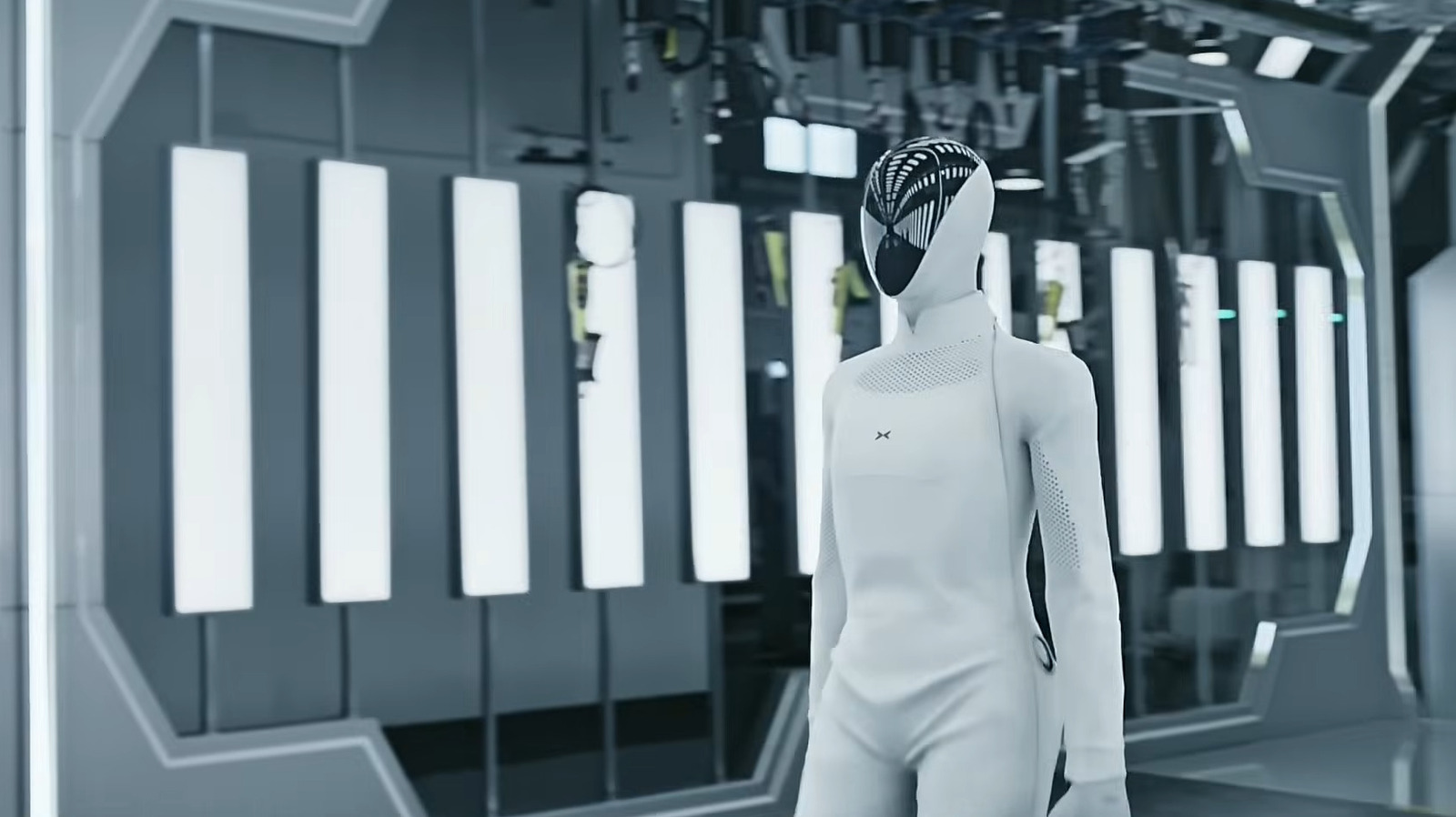
Introduction to the XPENG Iron Robot
The XPENG Iron robot has taken its first steps, literally, by walking off the assembly line immediately after being assembled. This milestone marks a significant achievement for XPENG, as it demonstrates the robot's ability to perform autonomous walking. The XPENG Iron robot is a humanoid robot designed for retail and campus assistance, and its ability to walk off the assembly line is a crucial step towards its deployment in these environments.
The XPENG Iron robot's specifications are impressive, with 76 degrees of freedom, three Turing AI chips, and 2,250 trillion operations per second. These specs enable the robot to perform complex tasks, such as fine-grip manipulation and real-time retail assistance. The robot's design also prioritizes safety, with a flexible polymer outer shell and compliant actuators to minimize injury risk during human-robot interaction.
Technical Specifications of the XPENG Iron Robot
The XPENG Iron robot's technical specifications are a key factor in its ability to perform autonomous walking and other complex tasks. The robot's 76 degrees of freedom allow it to move its torso, limbs, and spine with precision, enabling it to perform tasks that require flexibility and agility. The three Turing AI chips provide the robot with the necessary computing power to run its neural-network models locally, reducing latency and enabling real-time decision-making.
The robot's safety design is also an important aspect of its technical specifications. The flexible polymer outer shell and compliant actuators are designed to minimize injury risk during human-robot interaction, making the robot safer to operate in environments where humans are present. The robot's manufacturing automation is also noteworthy, with over 80% of the line's core processes automated, reusing quality-control software from XPENG's EV factories.
Retail and Campus Deployment Plans
XPENG plans to deploy the Iron robot in its own retail locations and corporate campuses first, with the goal of providing retail assistance and performing routine patrols of campus corridors. The robot is expected to greet visitors, provide product tours, and assist sales staff by fetching brochures or demo units. The robot's ability to perform these tasks will depend on its ability to navigate and interact with its environment, as well as its ability to communicate with humans.
The deployment of the XPENG Iron robot in retail and campus environments will have significant implications for the retail and robotics industries. The robot's ability to provide real-time retail assistance and perform tasks autonomously will enable retailers to improve customer service and reduce labor costs. The robot's deployment will provide insights into humanoid robots' feasibility in retail and campus environments, informing further development.
Comparison with Other Humanoid Robots
The XPENG Iron robot is not the only humanoid robot being developed for retail and campus assistance. Other companies, such as Tesla and Figure, are also developing humanoid robots with similar capabilities. The Tesla Optimus, for example, is a humanoid robot designed for factory floor and logistics applications, while the Figure 03 is a humanoid robot designed for data collection and research applications.
A comparison of the XPENG Iron robot with other humanoid robots reveals that it has a number of advantages, including its higher articulation and dedicated AI silicon. The robot's 76 degrees of freedom and three Turing AI chips enable it to perform complex tasks with precision and speed, making it well-suited for retail and campus assistance applications. However, the robot's reliability and safety certifications remain untested, and its deployment will depend on its ability to meet these requirements.
Open Questions and Risk Factors
While the XPENG Iron robot has made significant progress, there are still a number of open questions and risk factors that need to be addressed. The robot's reliability over a full shift, for example, remains untested, and its safety certifications are still pending. The robot's software ecosystem is also limited, with no third-party apps or developer access available.
The regulatory landscape for humanoid robots is also still evolving, with China's emerging robot-service regulations likely to impose reporting requirements that affect deployment timelines. The supply chain for the Turing AI chip is also a potential risk factor, with any bottleneck in fab capacity likely to delay mass production.
What to Watch Next
The XPENG Iron robot's development and deployment will be closely watched by the retail and robotics industries. The robot's upcoming endurance trials, safety certifications, and developer access will be key milestones in its development, and will provide valuable insights into its feasibility and potential applications.
The competitive response from other companies, such as Tesla and Figure, will also be an important factor to watch. A side-by-side performance benchmark of the XPENG Iron robot with other humanoid robots will clarify which platform is ready for commercial service first, and will provide valuable insights into the strengths and weaknesses of each robot.
Robot Development Status
The XPENG Iron robot has made significant progress, with its ability to walk off the assembly line and perform autonomous walking. The robot's technical specifications, retail and campus deployment plans, and comparison with other humanoid robots all suggest that it has a number of advantages and potential applications. However, the robot's reliability, safety certifications, and software ecosystem remain open questions, and its deployment will depend on its ability to meet these requirements.
For more information on the XPENG Iron robot and its development, please visit the source URL. The XPENG Iron robot is a significant development in the field of robotics, and its potential applications and implications will be closely watched by the retail and robotics industries.
Related Coverage
- Google launches Googlebooks laptops that sync tightly with Android phones
- Sonos Ace Ultra Shows Why the ‘All-In-One App’ Myth Is Holding Audio Brands Back
- Apple Mac Studio M5 Ultra price: Premium Power Meets Premium Cost