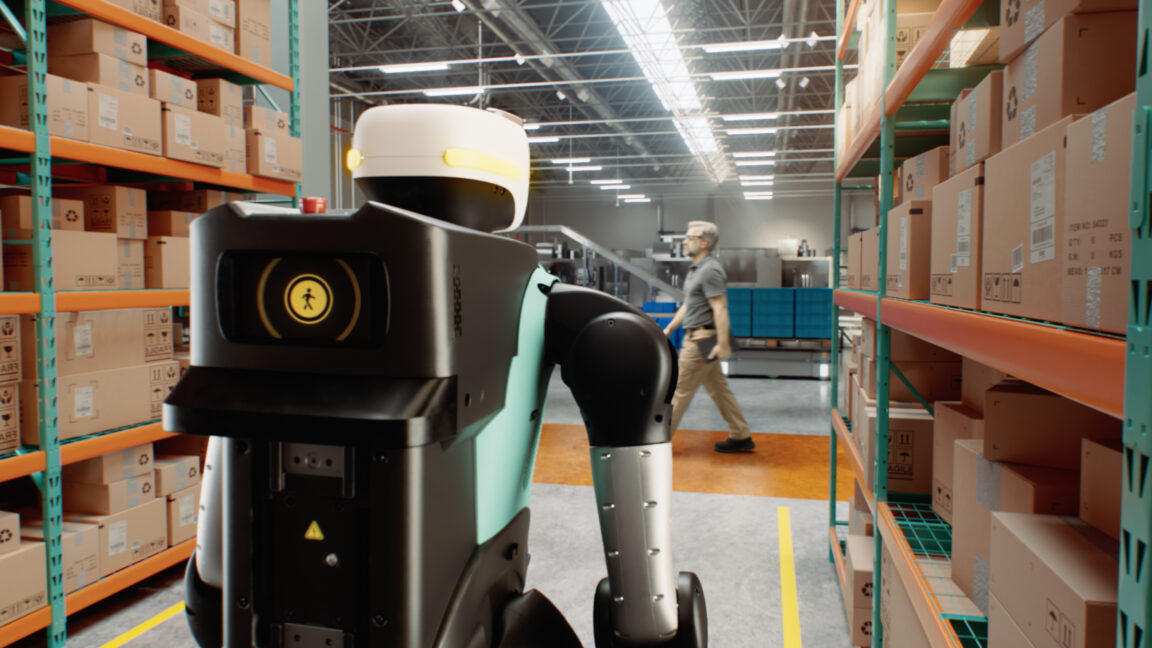
In June 2026, Nvidia broadened its architectural safety footprint by extending its Halos system from autonomous vehicles to general-purpose robotics, as detailed in reporting by Ars Technica. The hardware and software stack attempts to address mechanical and computational failure modes in physical AI deployments, spanning warehouse mobile bases, factory-floor humanoids, and surgical manipulators. Amit Goel, head of robotics ecosystem and edge computing at Nvidia, identified safety as the emerging bottleneck for autonomous hardware as underlying AI foundation models and robot kinematics mature.
Hardware and Silicon Isolation Mechanisms for Physical AI
The technical foundation of the physical AI safety push relies on dedicated silicon integration. The Nvidia IGX Thor computing module pairs standard functional compute workloads with an independent processor core reserved strictly for safety monitoring. Goel emphasized that functional and safety systems must execute on shared silicon in physical AI deployments to minimize latency between anomaly detection and actuator shutdown.
On the software tier, the Halos operating system architecture monitors individual hardware blocks and software libraries continuously. The runtime environment isolates safety-critical computations from general perception and navigation tasks to prevent thread starvation or memory corruption from cascading into physical hazards. Sensor telemetry routes through the Nvidia Holoscan Sensor Bridge, an intermediary layer embedded within microcontrollers or Field Programmable Gate Arrays designed to flag corrupted data streams before they reach downstream planning models. This structural partitioning attempts to isolate neural network hallucinations from direct motor commands, though verification remains a complex engineering hurdle for edge deployments.
Shifting Market Priorities and Revenue Realities
While data center infrastructure for large language models captures the majority of market capitalization analysis, physical AI products represent a concrete financial vector for the chipmaker. During a podcast appearance in March 2026, CEO Jensen Huang stated that the physical AI segment generated nearly $10 billion in annual revenue. Nvidia has backed this revenue stream through direct equity investments in humanoid developers like Agility Robotics and Figure AI, alongside foundation model enterprises.
The company also supplies an open humanoid robot reference design to researchers in partnership with Unitree. These investments position Nvidia as both a merchant silicon vendor and an infrastructural gatekeeper for the robotics ecosystem. Developers building on the IGX platform utilize Nvidia simulation environments for synthetic validation alongside an inspection lab program that evaluates safety artifacts during early prototyping phases.
Navigating Divergent Industrial Standards
Transitioning a safety architecture from autonomous road vehicles to general robotics introduces significant domain translation challenges. Automotive functional safety operates under relatively rigid, standardized regulatory definitions shared across international markets. By contrast, a robotic vacuum cleaner navigating an office corridor encounters radically different kinetic energy profiles, failure tolerances, and environmental variables than a robotic forklift moving heavy payloads in a loading dock.
Adapting the Halos framework required reimagining safety taxonomies to cover distinct machine classifications without stifling developer velocity. The available evidence does not show a unified global standard for humanoid robot safety analogous to automotive ISO standards, leaving manufacturers to interpret how generic software guardrails map onto specific physical morphologies.
As the industry navigates these integration hurdles, questions remain regarding how well hardware-enforced isolation layers will perform under the unpredictable failure modes of edge-deployed neural networks. A practical consequence of this hardware-software integration is that robotics firms building on Nvidia silicon face higher platform lock-in, trading software autonomy for turnkey functional safety compliance. Developers must weigh the speed of pre-validated safety modules against the long-term architectural constraints of proprietary silicon pipelines.
Related coverage
- Researchers Question Humanoid Robotics AI Adaptability as Nuclear Clocks Set Precision Benchmarks
- Okta-Led Alliance Proposes AI Agent Kill Switch to Secure Businesses
- OpenAI Daybreak Ukraine: Balancing AI Cyber Defense with Safety Concerns