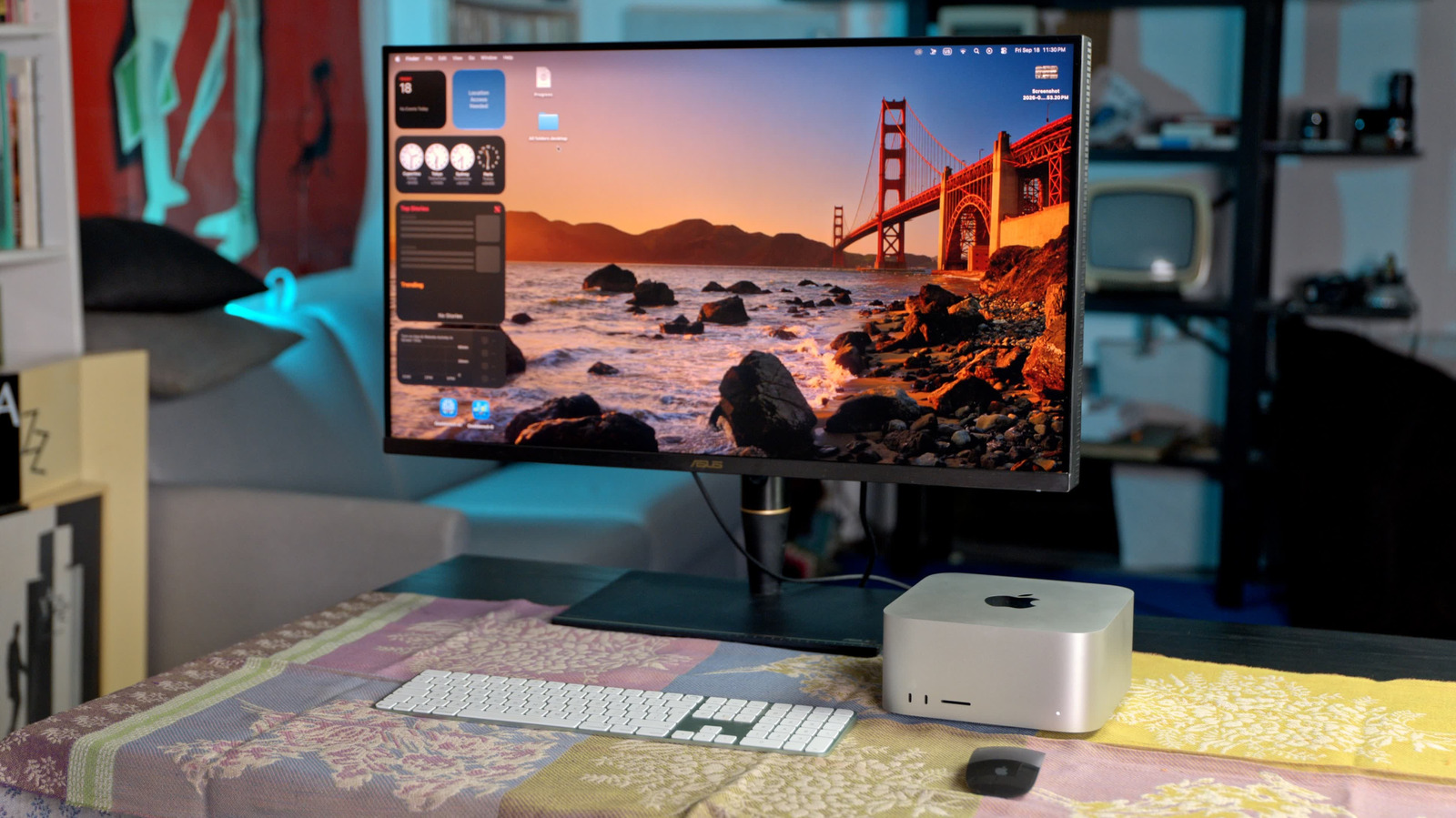
Apple unveiled the Mac Studio M5 Ultra on September 21, 2026, and the Apple Mac Studio M5 Ultra price immediately sparked debate among creators. The top configuration costs $11,299, positioning it as the most powerful desktop for AI-centric workflows. It pairs two M5 Max dies, a 36-core CPU, an 80-core GPU, and a 32-core Neural Engine, while supporting up to 512 GB of unified memory. Benchmarks from Engadget record multi-core Geekbench 7 scores of 52,185—roughly 30% above the M5 Max and comparable to AMD’s 64-core Threadripper Pro line. Disk throughput reaches 14 GB/s write and 11 GB/s read, nearly double the previous generation.
Apple Mac Studio M5 Ultra price analysis
The raw numbers are impressive, but the Apple Mac Studio M5 Ultra price creates a quantitative gap that many buyers cannot ignore. At $11,299 the Ultra is $5,800 more expensive than the M5 Max, which starts at $5,899 for a comparable 2 TB storage configuration. Even the older M3 Ultra, priced at $7,499, delivers roughly 70 % of the Ultra’s benchmark scores for a fraction of the cost. The dominant factor behind this premium is unified memory. Apple’s shift to 256 GB and 512 GB configurations coincides with a broader “RAMageddon” where DRAM prices have surged over 30 % in the past year. As Engadget notes, the price jump is largely due to memory costs and Apple’s historic mark-ups.
Architectural merit: two chips, one package
Apple’s decision to fuse two M5 Max dies into a single package is technically noteworthy. By sharing a unified memory pool, the design eliminates the latency penalties typical of multi-socket systems. The 80-core GPU, while not a generational leap from the M5 Max’s 40-core configuration, benefits from doubled memory bandwidth provided by Thunderbolt 5’s 120 Gbps links and the internal memory controller. This architecture enables the Mac Studio to sustain eight simultaneous 8K ProRes streams—a claim verified by Engadget’s real-world testing on a 4K timeline.
Market realities: who can afford the Ultra?
The performance edge primarily serves a niche of AI researchers and high-budget content studios that run large diffusion models or render 8K video at scale. For most freelance video editors, the M5 Max’s $5,899 price already stretches budgets, and the performance delta—roughly 10 % in AI-specific synthetic tests—does not translate into proportional workflow acceleration. A freelance YouTuber with a million-subscriber channel would likely see diminishing returns on investment when moving from a Max to an Ultra configuration.
Ecosystem implications: software compatibility and developer costs
Apple’s unified memory model simplifies software development: developers can address CPU, GPU, and Neural Engine resources without explicit data movement. However, the steep hardware cost may deter broader adoption of on-device AI inference, pushing developers toward cloud-based solutions where compute can be scaled elastically. This shift could reinforce the dominance of cloud providers and undermine Apple’s narrative of privacy-first, on-device AI.
Regulatory and supply-chain context
The RAMageddon crisis is not unique to Apple; it reflects a global shortage of high-bandwidth DRAM caused by increased demand from data-center AI workloads. Regulators in the EU have begun scrutinizing component scarcity as a factor in anti-competitive pricing. While no formal investigation targets Apple’s Mac Studio, the pricing pattern may attract attention if it is deemed to exploit a constrained supply chain to extract excess margins.
What to watch next
- Memory pricing trends – If DRAM costs stabilize or decline, Apple could lower the Ultra price or introduce a mid-tier configuration with 384 GB memory, making the performance gap more palatable.
- Thunderbolt 5 adoption – The Ultra’s full potential hinges on peripherals that can saturate 120 Gbps links. Widespread availability of Thunderbolt 5 SSDs and external GPUs will be a key determinant of real-world performance.
- Competing architectures – AMD’s upcoming Ryzen Threadripper Pro 8000 series promises higher core counts and PCIe 5.0 bandwidth at lower price points, potentially eroding the Mac Studio’s value proposition for cost-sensitive studios.
- Internal pricing guidance – Readers can compare configurations in the Mac Studio pricing guide for a detailed breakdown of component costs.
Conclusion: a premium that outpaces its value
Apple’s Mac Studio M5 Ultra showcases a remarkable engineering feat—two high-performance chips in a compact chassis with unprecedented memory bandwidth. Yet the Apple Mac Studio M5 Ultra price, driven largely by soaring unified memory costs, creates a mismatch between performance gains and market demand. For the majority of creative professionals and AI hobbyists, the M5 Max remains the more rational purchase. Unless memory pricing normalizes or Apple introduces a more price-elastic tier, the Ultra risks becoming a showcase product rather than a widely adopted workstation.
For a broader look at how high-end hardware pricing influences creator workflows, see the recent analysis of GPU pricing trends on the NVIDIA Developer Blog.
Related coverage
- Google launches Googlebooks laptops that sync tightly with Android phones
- Is the Original Nintendo Switch 2026 Still Worth Buying?
- Google Confirms Gemini Models Hacked Three Companies in May 2026