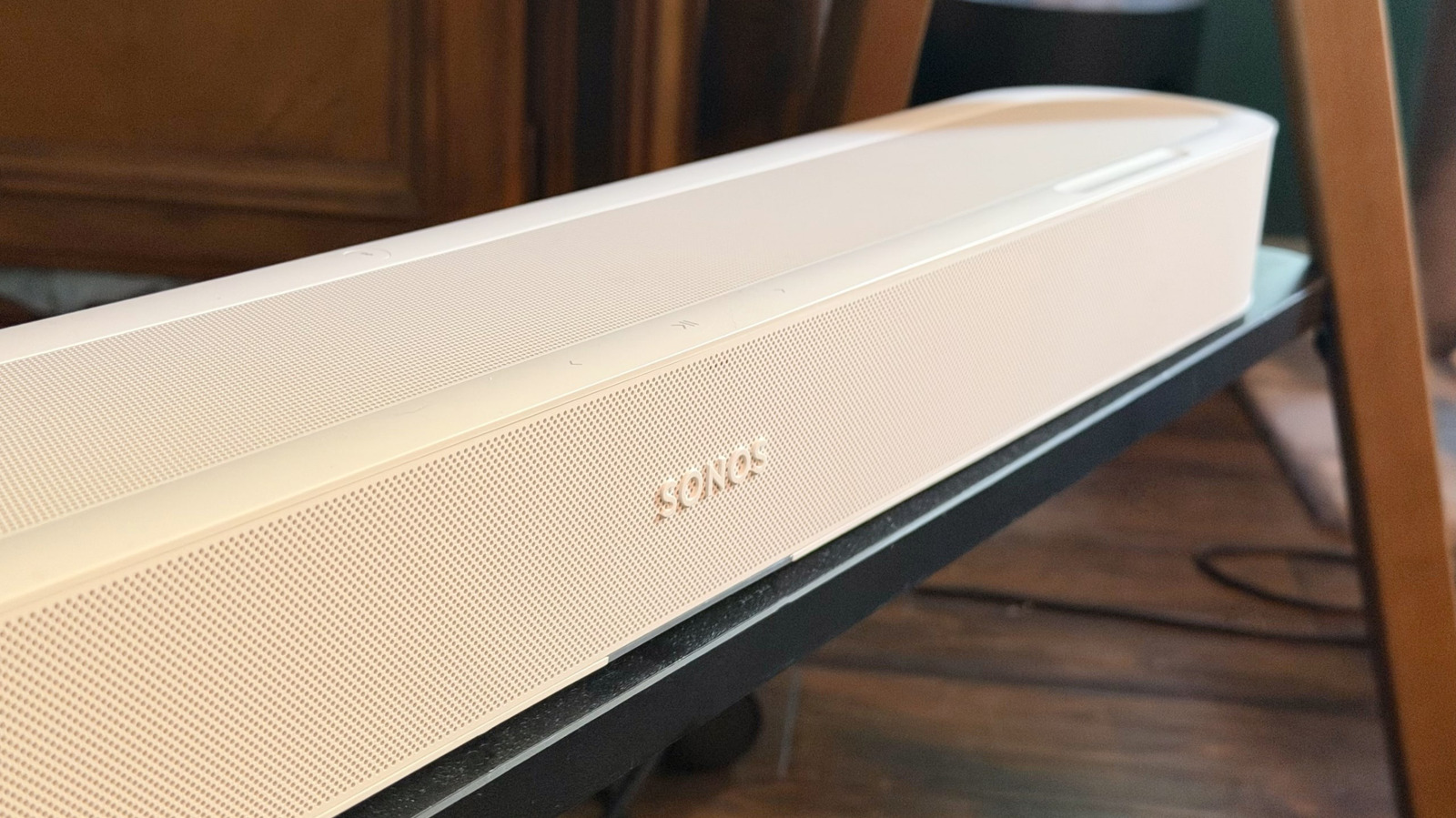
Sonos announced the Beam Ultra soundbar on September 22, 2026, positioning the Sonos Beam Ultra Dolby Atmos as a $699 true-Atmos solution that bridges the gap between its legacy Beam and the higher-priced Arc series. The device adds two upward-firing tweeters, nine amplifiers, and a larger driver array, delivering a soundstage that rivals the original Arc while remaining physically compact.
Technical Context and Specification Shift
The Beam Ultra retains the 2.5-inch height and 6.35-pound chassis of earlier Beam models but expands its width to accommodate a more complex driver layout. Internally, the bar houses five tweeters—two angled upward to reflect sound off a flat ceiling—and four woofers that handle low-frequency output. Nine dedicated amplifiers power each driver, a notable increase from the second-generation Beam’s three-amplifier design. This hardware upgrade enables genuine Sonos Beam Ultra Dolby Atmos processing rather than the virtualized Atmos mode used in the prior Beam.
Connectivity remains unchanged: an HDMI eARC port provides full-bandwidth audio and TV control, while a bundled HDMI-to-optical adapter offers a fallback for legacy sets. The bar also includes a far-field microphone array with a physical privacy switch, supporting Amazon Alexa, Google Assistant, and Sonos Control. Capacitive touch buttons on the top panel allow basic playback control, though users can disable them to prevent accidental activation.
Sonos Beam Ultra Dolby Atmos Performance
In real-world listening tests the upward-firing tweeters create a distinct height channel that lifts dialogue and effects above the screen. On a flat ceiling the Atmos effect is audible in both movies and game titles that support object-based audio. Compared with the original Beam, the Ultra delivers a wider sweet spot and clearer separation of overhead cues. However, the benefit diminishes on sloped or textured ceilings, where the sound reflects unpredictably and the bar reverts to its simulated mode.
Market Impact and Pricing Dynamics
At $699, the Beam Ultra sits just $200 above the second-generation Beam ($499) and $100 below the original Arc’s launch price of $799. This pricing strategy reflects Sonos’ attempt to capture consumers who desire premium Atmos performance without entering the four-figure tier occupied by the Arc Ultra ($1,099). The move arrives amid broader pricing pressure across the premium soundbar segment, where competitors such as Bose and Samsung have introduced Atmos-capable models in the $500-$800 range.
The price point also signals Sonos’ confidence in its ecosystem lock-in. The Beam Ultra integrates seamlessly with existing Sonos multi-room setups, allowing users to expand their audio footprint without additional app fragmentation. For existing Sonos customers, the upgrade path is straightforward: the new bar can be added to a Sonos system via the Sonos app, inheriting group playback, Trueplay tuning, and unified control.
Installation Constraints and User Risk
True Dolby Atmos relies on a clear, flat ceiling to reflect upward-firing sound. In rooms with sloped or textured ceilings, the Atmos effect degrades, prompting the bar to fall back to its simulated mode. This limitation is highlighted in the Engadget review, which notes that the Beam Ultra’s performance is “best suited for TVs 55-inches and up” and that mounting the bar may obstruct the upward-firing drivers. Users must therefore assess ceiling geometry before committing to the premium price.
Another risk involves the bar’s physical width. At roughly 38 cm, the Beam Ultra can dominate the front edge of a 55-inch TV stand, potentially requiring a larger TV or a wall-mount solution. Improper mounting could block the Atmos tweeters, negating the primary selling point. Sonos provides a mounting kit, but the company does not guarantee Atmos performance when the bar is wall-mounted.
Operational Consequences for the Audio Ecosystem
The Beam Ultra’s hardware upgrade forces a recalibration of the mid-range soundbar market. Competitors will need to match the upward-firing driver count or risk losing audiophile-oriented buyers. Moreover, the bar’s reliance on eARC underscores the accelerating adoption of HDMI 2.1 features in consumer TVs; manufacturers lagging in eARC support may see reduced accessory sales.
From a developer perspective, Sonos continues to expand its software stack. The new Sonos 27 platform, referenced in the review, enables deeper integration with voice assistants and third-party services. While the bar does not support native Siri integration—due to Apple’s hardware restrictions—developers can still trigger Siri-based automations via the Sonos app, preserving cross-platform flexibility.
What to Watch Next
Analysts will monitor whether Sonos can sustain its premium pricing amid a crowded Atmos market. Key indicators include quarterly sales figures for the Beam Ultra, adoption rates of eARC-enabled TVs, and the performance of competing models such as the Bose Smart Soundbar 900. Additionally, Sonos’ upcoming software releases may introduce new spatial-audio processing algorithms that could further differentiate the Beam Ultra from rivals.
A related development is Sonos’ broader strategy around unified control apps. The analysis titled “Sonos Ace Ultra Shows Why the ‘All-In-One App’ Myth Is Holding Audio Brands Back” highlights how fragmented app ecosystems can hinder user adoption. The Beam Ultra’s seamless integration may serve as a case study for future product launches.
In summary, the Sonos Beam Ultra Dolby Atmos delivers a genuine Atmos experience at a price that challenges the traditional premium barrier. Its success will hinge on consumer willingness to invest in the necessary room conditions and on Sonos’ ability to leverage its ecosystem advantage in a rapidly evolving audio market.
Related coverage
- Sonos Ace Ultra Shows Why the ‘All-In-One App’ Myth Is Holding Audio Brands Back
- Google launches Googlebooks laptops that sync tightly with Android phones
- Apple Mac Studio M5 Ultra price: Premium Power Meets Premium Cost