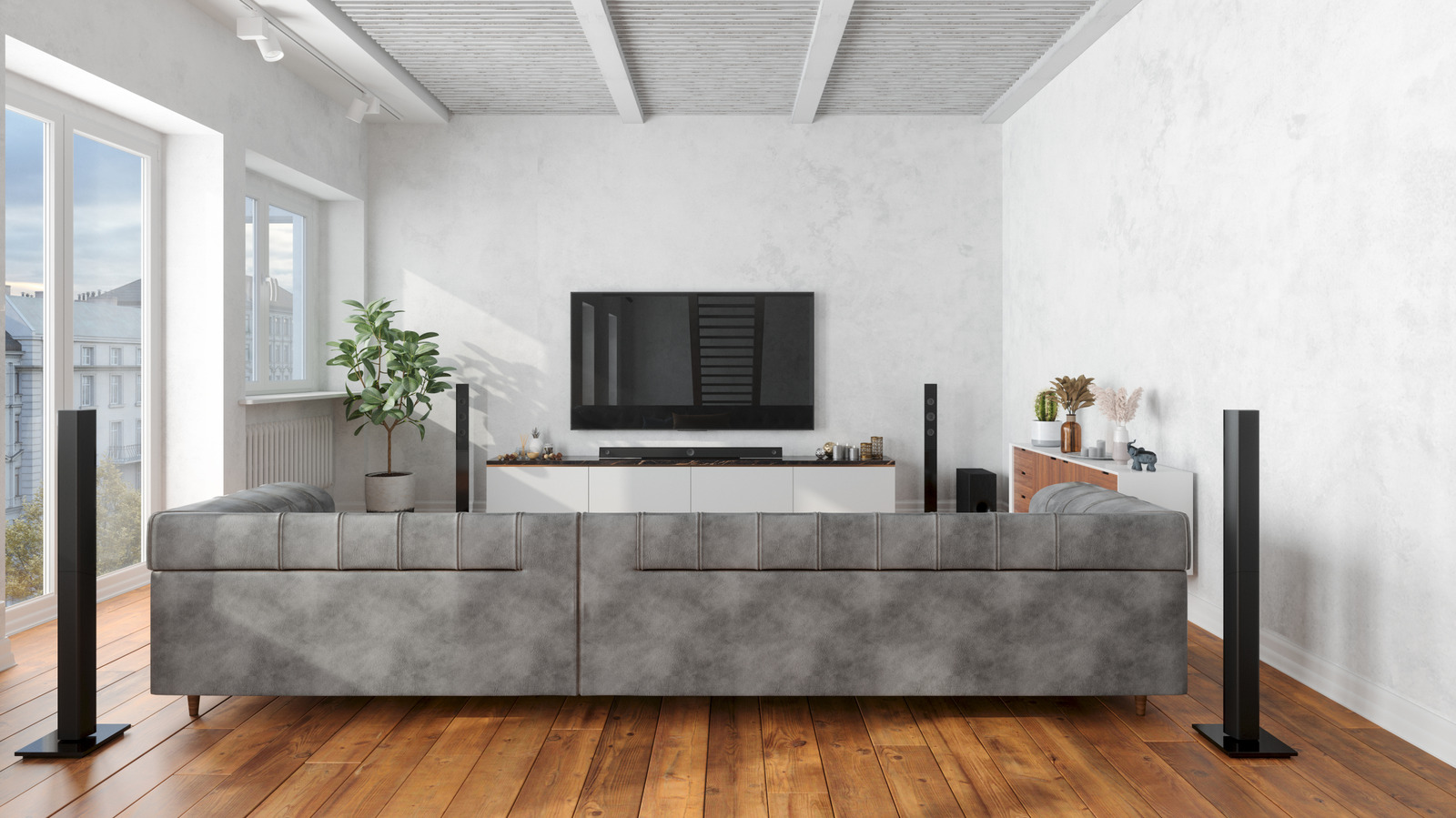
On September 20, 2026, Engadget reported that simple changes can significantly improve home surround sound. According to Anthony Grimani, President of Performance Media Industries, more than half of what you hear in a regular room is sound bouncing off hard surfaces like ceilings, walls, and hard flooring. This highlights the importance of addressing room acoustics to achieve optimal home surround sound quality.
Understanding Room Acoustics and Its Impact on Home Surround Sound
Room acoustics are the easiest thing to fix and often the most overlooked aspect of home surround sound. Hard surfaces like bare walls, tile floors, and large windows reflect sound waves, creating muddied sound and echo that affect dialogue and sound effects. To improve room acoustics, you can add rugs, curtains, artworks, and framed photos to reduce sound reflection. This simple and cost-effective solution can make a significant difference in the overall sound quality. For instance, a room with a high ceiling can benefit from acoustic panels to reduce echo and sound reflection. Companies like Wirecutter provide expert reviews on soundbars and home theater systems, helping consumers make informed decisions.
Speaker Placement and Angling for Optimal Home Surround Sound
Where you place your speakers is half of the equation, while the other half is how you point your speakers. The front left and right speakers need to be about a foot away from side and back walls. They also need to have about the same space between them as there is between the speakers and your seating position. The speakers should also be angled toward your main seat. For 5.1 surround systems, you have to position the speakers to the sides of your seating area, always aiming towards your main seat, ideally at or slightly above ear level. This precise placement ensures that the sound is directed towards the listener, creating a more immersive experience. As noted by the CNET guide to calibrating your home theater system, proper calibration can make a significant difference in the overall sound quality.
Subwoofer Placement and Its Effect on Home Surround Sound Quality
Subwoofer placement is one of the things that has the biggest impact on sound quality in any room. When it comes to subs, it's not so much which direction you angle them, but rather where you put them in the room. Subwoofers are omnidirectional by nature, so a slight change in orientation won't break your whole sound quality. You do have to ensure, however, that ported subs are not boxed in or glued to the wall because those vents need room to breathe. Experimenting with different subwoofer placements can help you find the optimal spot for the best bass response. Home theater enthusiasts can find valuable resources on websites like CNET and Wirecutter, which provide expert reviews and guides on home theater systems.
Calibration and Settings for Home Surround Sound Systems
Calibration is the step most people skip because they assume it's complicated. In reality, most modern AV receivers come with automatic calibration software. Systems from brands like Yamaha or Pioneer test tones through each speaker, measure the room's acoustics, and apply corrective filters automatically. You can also calibrate these things manually with a sound level meter app on your phone or an external meter. Either way, calibration is needed for each system because out-of-the-box settings don't account for all room setups. As technology continues to evolve, we can expect to see new innovations in home surround sound systems, such as the integration of artificial intelligence and machine learning to optimize sound quality.
Additional Tips for Enhancing Home Surround Sound
Experts like Anthony Grimani recommend moving furniture around to find the optimal seating position. Depending on the room's layout, pushing the couch a foot or two forward or backward can make a significant difference in clarity and bass response. Regularly checking cables for damage or wear is also crucial, as frayed or damaged cables can affect sound quality. Wired connections are preferred over Wi-Fi or Bluetooth for consistency and sound quality. Investing in a high-quality soundbar or home theater system can provide a more immersive experience. According to a report by Wirecutter, a good soundbar can make a significant difference in the overall sound quality. Home theater enthusiasts can explore more options and find the best fit for their needs by visiting websites like CNET and Wirecutter.
In conclusion, improving home surround sound doesn't require tearing your setup apart and starting over. Addressing room acoustics, refining speaker aim, figuring out the best subwoofer placement, running calibration, and adjusting your seating position will all impact how good your system sounds. By following these simple tips, you can enhance your home theater experience without breaking the bank. As technology continues to evolve, we can expect to see significant improvements in home surround sound quality, with innovations like AI-powered soundbars and machine learning algorithms optimizing sound settings for a more immersive experience.
Related coverage
- How to set up Sonos speakers using the app
- Retroid Pocket Duo Lite Plus Expands Handheld Gaming Options
- Free Smart-TV Streaming Options Mapped: 7 Services You Can Activate Today