Meta Waddle World Launches as Tamagotchi-Style AI Pet App
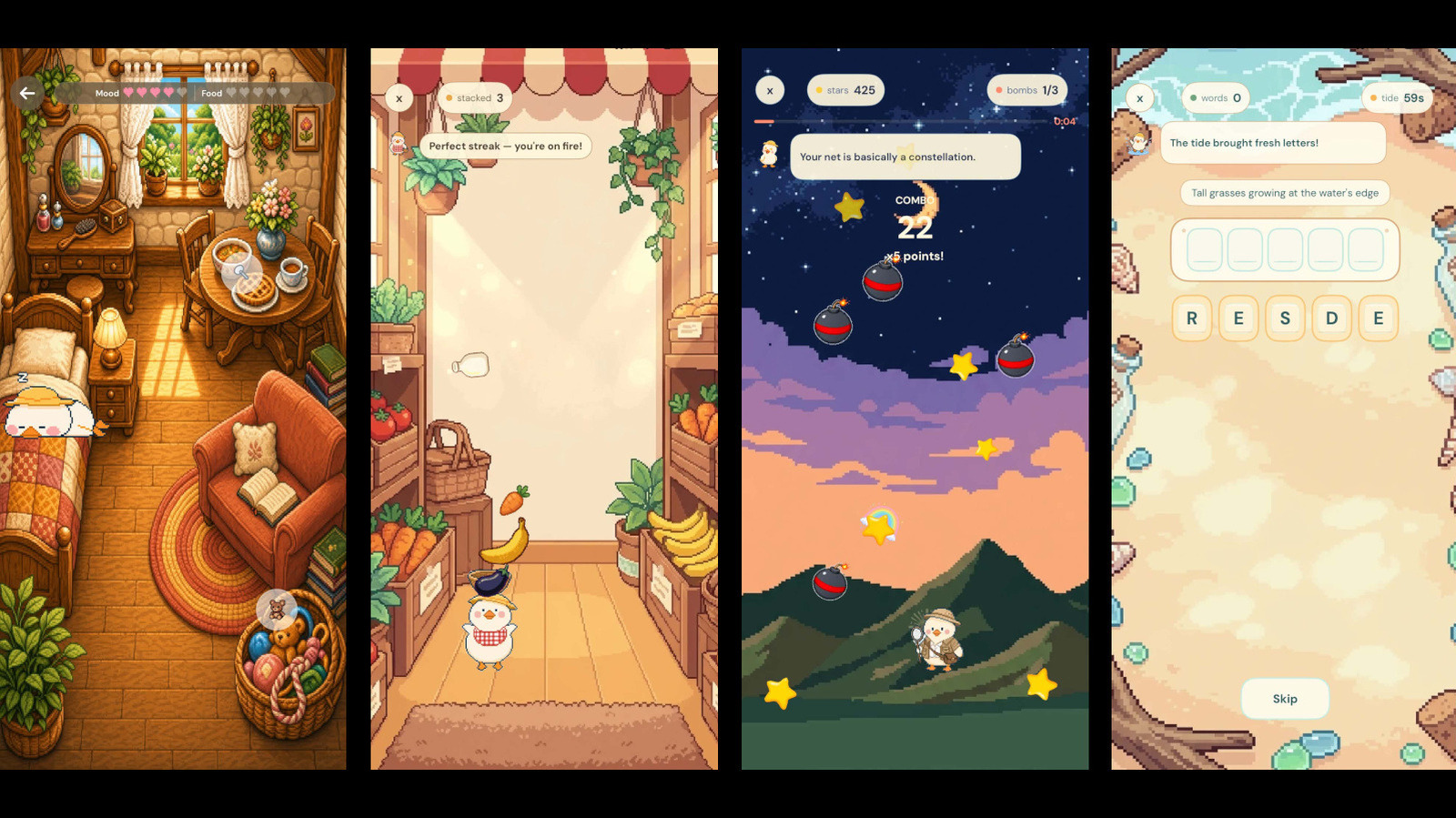
Meta Waddle World debuted in late September on the Apple App Store and Google Play, but only for users in the Philippines. The new title positions itself as a 16-bit virtual pet that blends classic Tamagotchi mechanics with conversational AI and a daily journaling interface.
Core Gameplay and AI Interaction
The core loop mirrors the egg-hatching and pet-care routine of Tamagotchi. Players hatch an egg to receive a digital companion, then feed, play with, and monitor its well-being. What sets Waddle World apart is the daily journaling feature. Users type or dictate diary entries; the AI pet replies with text and a hand-drawn doodle that accompanies the reply. Meta describes the journaling feature as a "daily journal disguised as a pet," framing the conversation as a two-way narrative rather than a simple command-response.
The AI responses are generated by Meta’s conversational models, trained on a mix of public dialogue datasets and proprietary user interaction logs. While the exact model size is undisclosed, the app’s lightweight 16-bit graphics and on-device processing suggest a modest parameter count, likely in the range of a few hundred million. The doodles are rendered by a separate generative sketch engine that translates textual prompts into simple line art.
Mini-Games and In-App Economy
Beyond the journal, Waddle World offers three mini-games that reward points redeemable for food and toys. The first game stacks grocery items atop the pet’s head, testing precision and timing. The second involves catching falling stars while avoiding bombs, a classic arcade mechanic. The third challenges players to spell words from jumbled letters on screen. Points earned in these games can be spent on virtual items that affect the pet’s appearance and mood.
The in-app economy is entirely virtual; no real-money purchases are advertised in the current listings. Meta’s focus appears to be on engagement metrics—time spent writing, frequency of interactions, and completion rates of mini-games—rather than direct monetization.
Regional Rollout and Future Plans
Meta’s decision to launch Waddle World only in the Philippines is not explained in the app store descriptions. The country’s high smartphone penetration and active social-media user base make it a logical testing ground for conversational AI experiments. The limited release also allows Meta to monitor server load, latency, and user feedback before scaling.
In parallel with the app, Meta announced the Muse Charm at its September Connect event. The Muse Charm is a keychain-sized, egg-shaped device that houses a user’s Muse avatar. The device promises constant access to the Muse companion, potentially bridging the gap between mobile and physical interaction. Meta targets a holiday release in December, aligning the device launch with the broader consumer electronics cycle.
Technical Implications for Developers
Developers building similar experiences can glean several takeaways from Waddle World’s architecture:
- Conversational AI + Visual Output – The app couples text generation with a lightweight sketch engine, illustrating a viable pipeline for multimodal interaction on mobile.
- Mini-Game Integration – Rewarding users with in-app currency that feeds back into the main narrative loop demonstrates a closed-loop engagement model.
- Regional Testing – Deploying a feature-rich app in a single market allows for controlled A/B testing of language models and user interface tweaks.
Meta’s approach suggests that future AI pet or companion apps may rely on similar modular designs: a core conversational engine, a generative art component, and a gamified economy to sustain daily engagement.
Original Analysis
Meta’s limited-market launch signals a cautious rollout strategy. By confining Waddle World to the Philippines, Meta can collect granular data on user interaction patterns, language model performance, and server scalability without exposing the product to global scrutiny. The app’s design—combining journaling, AI dialogue, and mini-games—creates multiple touchpoints that can be monetized later through in-app purchases or subscription tiers. However, the absence of any current monetization options raises questions about the app’s long-term revenue model. If Meta chooses to introduce real-money transactions, it will need to balance user experience with profitability, especially in a market where free apps dominate.
The Muse Charm’s announced December release adds a hardware dimension that could extend the app’s ecosystem. If the device can sync pet state across platforms, it may unlock new monetization pathways, such as premium accessories or exclusive content. Developers should watch for updates on cross-device persistence and potential API exposure that could enable third-party integrations.
Open Questions
- What language models power the AI pet’s responses, and how are they fine-tuned for local dialects?
- Will Meta introduce real-money transactions or subscription tiers in later releases?
- How will the Muse Charm integrate with Waddle World, and will it enable cross-device persistence of the pet’s state?
These questions remain unanswered as Meta continues to iterate on the product. The next public update will likely clarify the scope of monetization and the geographic expansion plan.
Related coverage
- Old Chromebook Repurpose: Keep Your Device Alive After a Googlebook Upgrade
- Android 17 app bubbles: Pin apps to the top of your screen
- Google privacy policy now permits Gmail data to feed ad targeting via Personal Intelligence