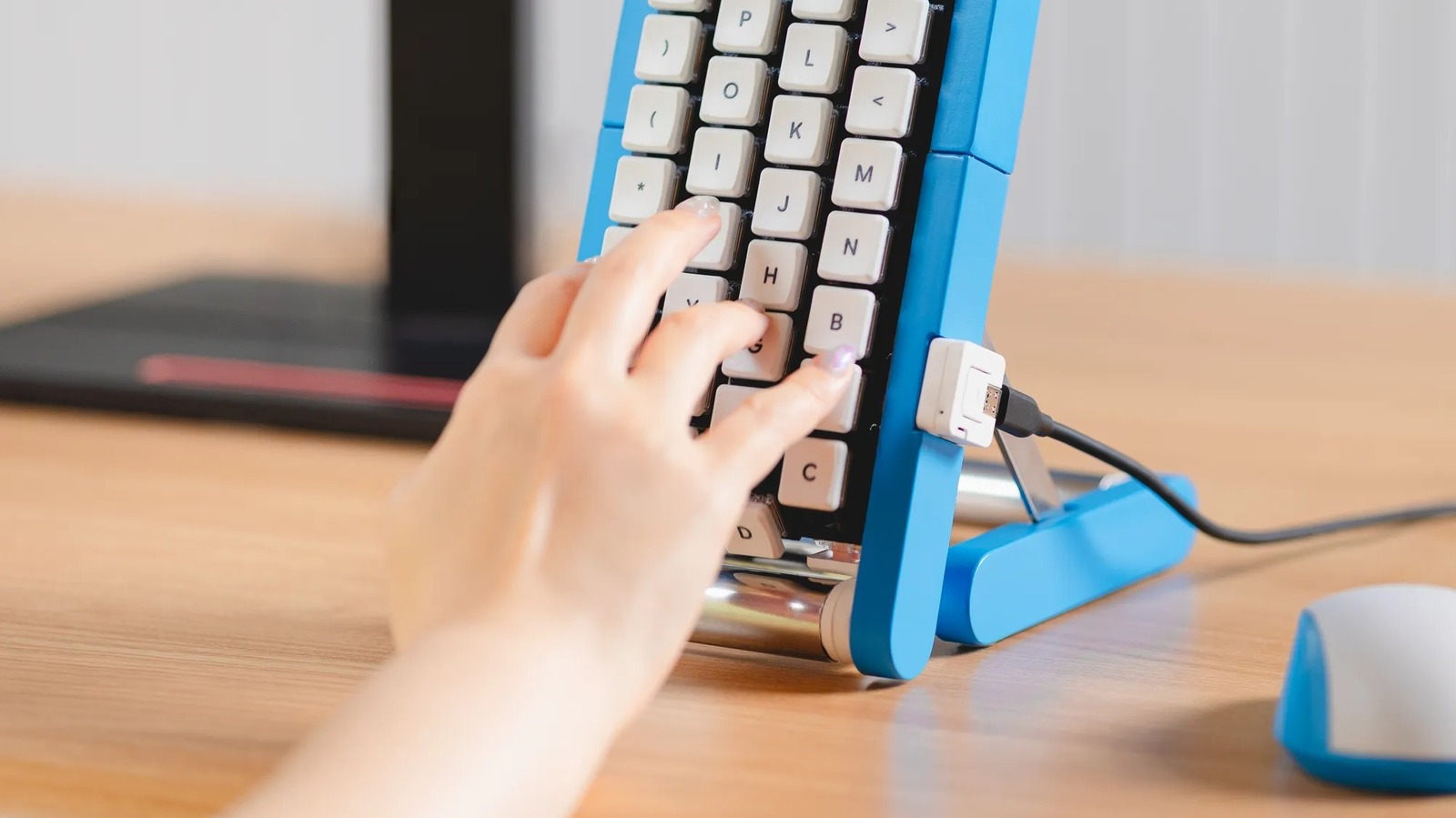
Google Japan conveyor belt keyboard debuts as April Fools joke
Google Japan unveiled a conveyor-belt keyboard on April 1, 2026, as part of its long-running April Fools tradition. The prototype combines a mechanical keyboard with a rotating belt that delivers keys to the user’s hand. The design is posted on GitHub, allowing developers and hobbyists to assemble a DIY version. The device is marketed as a one-handed solution that reduces fatigue by eliminating the need to move the hand to reach keys. The claim is presented in a tongue-in-cheek tone, consistent with previous Google Japan pranks.
How the conveyor-belt keyboard works
The belt mechanism rotates beneath a fixed set of keys. A sensor array detects when a key aligns under the user’s fingertips, triggering an electronic signal that registers the keystroke. The belt’s speed is adjustable via a microcontroller, allowing users to set a cadence that matches their typing rhythm. The design files include a 3D-printed chassis, a stepper motor, and a simple Arduino sketch that translates sensor input into USB HID events. The GitHub repository lists component specifications: a NEMA 17 stepper motor, a 12-V power supply, and a 32-bit microcontroller. No proprietary hardware is required.
Developer-friendly build instructions
Google Japan’s GitHub repo contains a README that walks through assembly steps. The instructions assume familiarity with basic electronics and 3D printing. Key steps include: 1) 3D-printing the chassis and mounting brackets; 2) wiring the stepper motor to the driver board; 3) connecting the sensor array to the microcontroller; 4) flashing the provided firmware; and 5) calibrating the belt speed. The repository also hosts a test script that logs keystrokes to a serial console, enabling developers to verify functionality before connecting to a host computer.
Context in Google Japan’s prank history
Google Japan has released a new Gboard-related gag each year since 2010. The 2010 drumset keyboard featured hundreds of keys to mock the complexity of Japanese Kanji. Subsequent years saw a Morse-code single-key keyboard (2012), a flip-card keyboard (2013), a robotic arm joystick (2014), a blowing-detector keyboard (2015), a flick-typing mechanical keyboard (2016), a bubble-wrap scanner (2017), a handwriting overlay (2018), a spoon-bend keyboard (2019), and a teacup keyboard (2021). The conveyor-belt keyboard follows this pattern, offering a playful take on ergonomic typing.
Practical value versus marketing claim
While the design demonstrates a novel use of a conveyor belt for input, the practical benefits are unsubstantiated. The claim that the device reduces fatigue by delivering keys to the hand is anecdotal and lacks empirical testing. The hardware is simple enough that a developer could prototype it, but the ergonomics of a moving key surface remain questionable. The primary value lies in the open-source design and the opportunity for makers to experiment with unconventional input methods.
What developers can do next
Developers interested in alternative input can clone the GitHub repo, modify the firmware to support custom keymaps, or integrate the belt mechanism with existing Gboard APIs. The project could serve as a sandbox for research into haptic feedback and adaptive typing speeds. However, the lack of performance benchmarks or user studies means that any claims about efficiency or fatigue reduction remain speculative.
Open questions
- Does the conveyor-belt keyboard provide measurable typing speed improvements?
- How does the belt’s mechanical noise affect usability in quiet environments?
- Can the design be scaled for mass production, or is it strictly a hobbyist project?
These questions highlight the gap between the playful announcement and a viable product. The device remains a curiosity rather than a commercial offering, but it offers a concrete starting point for developers curious about unconventional input hardware.
Related coverage
- Ultrahuman Rolls Out Ultrahuman Heart Rhythm Scans Through FibriCheck Partnership
- Okta-Led Alliance Proposes AI Agent Kill Switch to Secure Businesses
- Meta Muse Charm: Revolutionizing AI Assistants with Keychain Device