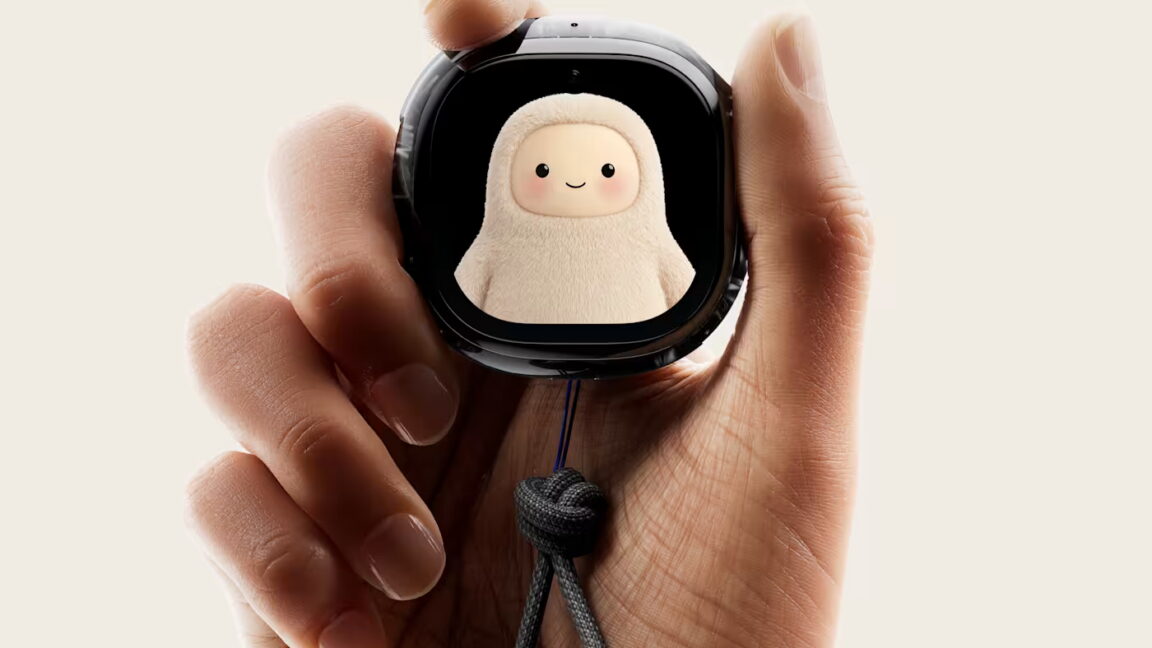
Meta unveiled the Muse Charm, a keychain-sized AI assistant, at the Connect conference on September 24, 2026. The pendant-like device, which features a fingerprint sensor, a 1.2-inch OLED screen displaying the Muse avatar, and full-duplex voice interaction, is scheduled to ship in December 2026. By moving the Muse agent from a smartphone app to a dedicated hardware form factor, Meta aims to capture the fastest way to talk to your Muse for users who do not wear smart glasses or keep a phone in hand. The Meta Muse Charm offers users a convenient way to interact with their AI assistant, making it a useful tool for daily tasks.
Context and technical specifications
The Muse Charm builds on the Muse app that debuted two weeks earlier and quickly rose to the top of both the Apple and Android app stores in the United States. The hardware platform appears to be based on Meta’s in-house low-power AI chip, similar to the one used in the latest Quest 3 headset, offering on-device inference for wake-word detection and basic command parsing. The device’s ARM Cortex-A78 core runs at 2.2 GHz, paired with 4 GB LPDDR5 memory and a 64 GB eMMC storage module for cached user data and model snapshots.
Connectivity uses Bluetooth 5.2 and Wi-Fi 6E to hand off to a paired smartphone with the full Muse model. The on-device component is limited to a 150-million-parameter transformer that handles wake-word detection, speaker verification, and short-form query routing. All substantive language generation still occurs in Meta’s cloud-based Muse family of models, which range from 2 billion to 10 billion parameters and run on Meta’s custom AI accelerators in its data centers.
Market impact and ecosystem shift
The announcement marks Meta’s first consumer-grade AI hardware beyond its Ray-Ban Stories glasses. By diversifying the form factor, Meta hopes to tap into the 3 billion-user base that already interacts with its social platforms while creating a new revenue stream from hardware sales and transaction fees. Zuckerberg indicated that the free tier of Muse will eventually monetize through a small fee from transactions such as grocery orders or travel bookings initiated via the Charm. The Meta Muse Charm is poised to revolutionize the way users interact with their AI assistants, making it a crucial component of Meta's AI strategy.
If adoption mirrors the app’s early download surge, Meta could add a significant hardware margin to its AI portfolio, which has struggled to offset a quarter-drop in share price between September 2025 and August 2026. The stock rebounded after the September 8 launch, adding roughly $300 billion to market capitalisation, suggesting investor optimism that hardware can anchor Meta’s AI bets.
Privacy, security, and regulatory considerations
Meta emphasised state-of-the-art privacy and security for the Charm, yet the company has already patched a vulnerability that allowed a malicious actor to hijack another user’s Muse agent. The new device inherits the same attack surface: fingerprint data, voice recordings, and cross-service permissions. Meta’s privacy policy now requires explicit consent before the Charm can access email inboxes, calendar data, or financial-service apps—a step that may slow adoption among privacy-conscious users.
Regulators in the EU and US have begun scrutinising AI-enabled wearables for covert recording risks. The Ray-Ban glasses, previously criticised for pervert-glass concerns, now include an LED indicator for camera use; the Charm, lacking a camera, sidesteps that specific issue but still records voice. Ongoing investigations into Meta’s data-sharing practices could affect the rollout timeline if additional safeguards are mandated.
Operational consequences for developers
Developers targeting the Muse ecosystem must now consider multi-device contexts. The Muse SDK, released alongside the app, now supports charm-mode APIs that expose sensor data (fingerprint status, microphone stream) and allow developers to request transaction permissions. This expands the developer surface area but also introduces new compliance requirements for handling biometric data under GDPR and CCPA. Early adopters will need to implement on-device encryption for any cached user data and design fallback flows for when the Charm is offline, as the device relies on cloud inference for most natural-language tasks.
What to watch next
The next critical milestone is the December 2026 shipping date. Analysts will monitor initial sales figures, return rates, and the proportion of users who enable the full suite of data integrations. A second-generation Charm is rumored to include a tiny LiDAR sensor for spatial awareness, which could enable context-aware commands such as turn on the lights when I enter the room. Additionally, Meta’s plan to roll Muse onto its upcoming VR glasses in spring 2027 will test whether a unified AI experience across wearables can drive ecosystem lock-in.
Stakeholders should also track the ongoing dispute with Amazon, which has blocked Meta agents from accessing its shopping platform. If the block persists, Meta may need to build its own commerce layer or negotiate API access, influencing the revenue model for transaction fees.
For a broader view of how AI agents are being integrated into hardware, see the recent analysis of Anthropic’s Claude integration with consumer devices at Ars Technica. The Meta Muse Charm's success hinges on Meta addressing privacy and security concerns while providing a smooth user experience.
Related coverage
- Anthropic Claude CRISPR discovery: New enzyme system found in wet lab
- OpenAI Daybreak Ukraine: Balancing AI Cyber Defense with Safety Concerns
- Apple CarPlay customization: Simple tweaks to boost your driving experience
Explore more on this topic
- More ai-assistants coverage
- Learn more about Meta's AI strategy and the development of the Muse Charm at Ars Technica