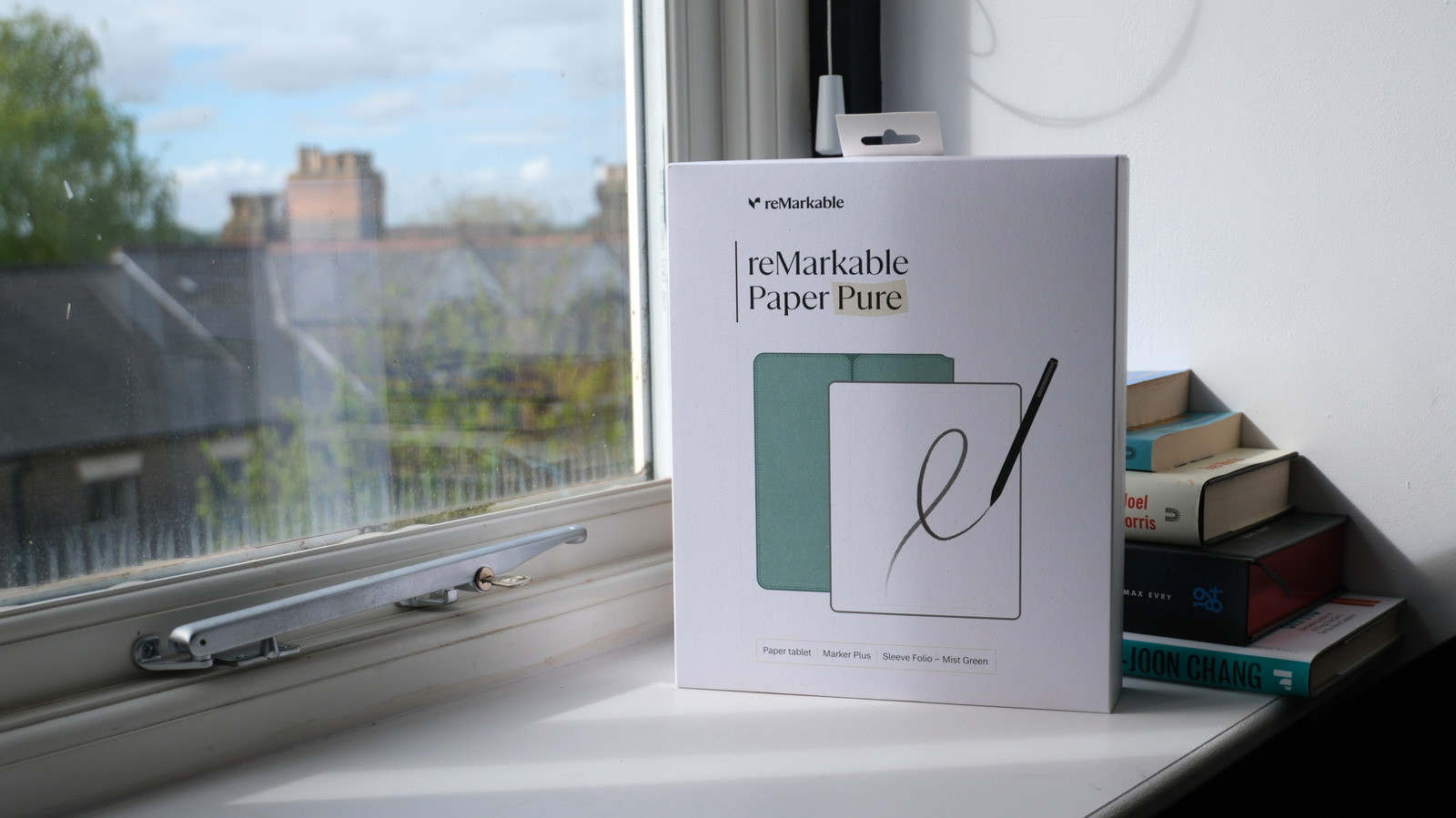
E Ink tablets now claim up to two weeks of continuous reading on a single charge, positioning them as a niche alternative to the iPad for users whose primary tasks are static content consumption and annotation. The claim, detailed in a recent Engadget piece, rests on the physics of electrophoretic displays: particles shift only when the screen is refreshed, allowing the device to enter a near-zero-power state between page turns Engadget. By contrast, iPads must constantly power an emissive OLED or LCD panel, draining the battery even when the display shows a static page.
Context and Technical Basis
E Ink, short for electronic ink, is a reflective technology that mimics paper by scattering ambient light rather than emitting it. This design eliminates the need for a backlight, which reduces power draw and eliminates the glare that plagues traditional tablets under bright conditions. The reMarkable Paper Pro, for example, lists a 2,000 mAh battery that can sustain up to three weeks of light reading, while the iPad Air 2024 advertises roughly ten hours of mixed use. The disparity grows when the device is used outdoors: the iPad’s backlit panel struggles to achieve sufficient luminance against direct sunlight, whereas an E Ink screen remains perfectly legible because it simply reflects the sun’s rays.
Impact on User Experience
The ergonomic implications are notable. A reflective surface reduces eye strain during prolonged sessions, a benefit confirmed by ophthalmology studies that link emissive displays to increased blink suppression. Moreover, matte finishes on many E Ink tablets provide a tactile feel akin to paper, improving stylus control for note-taking and sketching. However, the technology’s limitations surface in color reproduction and motion handling. Current color E Ink panels, such as those in the Onyx Boox Nova3 Color, achieve a maximum of 4,000 colors—far below the billions of shades rendered by iPad Pro’s Liquid Retina XDR display. This gap translates to muted images, washed-out comics, and inaccurate UI themes.
Motion is another pain point. Because each frame requires particle realignment, refresh rates hover around 1 Hz for grayscale and 0.5 Hz for color panels. The resulting ghosting makes video playback impractical and introduces noticeable lag when navigating menus. Users reported in the Engadget article that they often resort to a smartphone for web browsing when a complex page stalls on an E Ink device, highlighting a performance trade-off tied to the modest ARM Cortex-A53 processors typically paired with these displays.
Market and Ecosystem Consequences
Manufacturers are targeting a specific segment: professionals, academics, and avid readers who prioritize battery longevity and outdoor usability over multimedia richness. The niche is reflected in pricing; the reMarkable Paper Pro retails near $1,200, positioning it as a premium digital notebook rather than a direct iPad competitor. Meanwhile, Apple continues to iterate on its OLED panels, introducing higher brightness (up to 1,600 nits) and adaptive refresh rates that mitigate glare while preserving battery life through low-power modes.
The divergent hardware paths influence developer ecosystems. iOS developers benefit from a unified SDK, extensive App Store distribution, and hardware acceleration for graphics. E Ink tablets often run Android forks or proprietary Linux layers, limiting app availability and requiring developers to adapt UI expectations for slower refresh cycles. This fragmentation discourages mainstream app investment, reinforcing the devices’ focus on reading-oriented software such as PDF annotators and markdown editors.
Risks and Uncertainties
The primary risk for consumers lies in mismatched expectations. An E Ink tablet purchased as an iPad replacement for video streaming or gaming will quickly reveal its shortcomings. Additionally, the limited processing power raises security concerns; older ARM cores may lack hardware-based mitigations for recent vulnerabilities (e.g., Spectre-V4), potentially exposing users to exploits if the device’s firmware is not regularly updated.
From an industry standpoint, the modest adoption rate could stall further R&D investment. If color E Ink panels fail to close the gap in vibrancy and refresh speed, manufacturers may pivot toward hybrid solutions—such as micro-LED backplanes that retain reflectivity while offering higher frame rates. The timeline for such breakthroughs remains speculative.
What to Watch Next
Analysts should monitor three indicators: (1) the release cadence of next-generation color E Ink panels, which are slated for early 2027 by E Ink Corp.; (2) software ecosystem growth, particularly the emergence of cross-platform note-taking suites that can sync seamlessly with iPad and desktop environments; and (3) battery-technology advances, such as solid-state cells that could further extend the already impressive endurance of reflective tablets.
For readers seeking a device that excels in static content consumption, the E Ink tablet’s power efficiency and sunlight readability present a compelling proposition. Yet, anyone requiring vibrant color, fluid motion, or a broad app catalog will likely remain anchored to the iPad ecosystem. The market thus bifurcates into two clear use-case corridors, each reinforced by distinct hardware trade-offs.
This analysis incorporates data from Engadget and references the broader display-technology landscape. For a deeper dive into OLED brightness trends, see the recent NVIDIA Developer Blog on high-dynamic-range rendering.
Related coverage
- Google TV and Apple Remote Features Turn Phones Into Universal TV Remotes
- Android Gaming Phone Specs: What to Look for in a Premium Device
- Retroid Pocket Duo Lite Plus Expands Handheld Gaming Options