Joby Aviation autonomous flight marks a coast-to-coast milestone
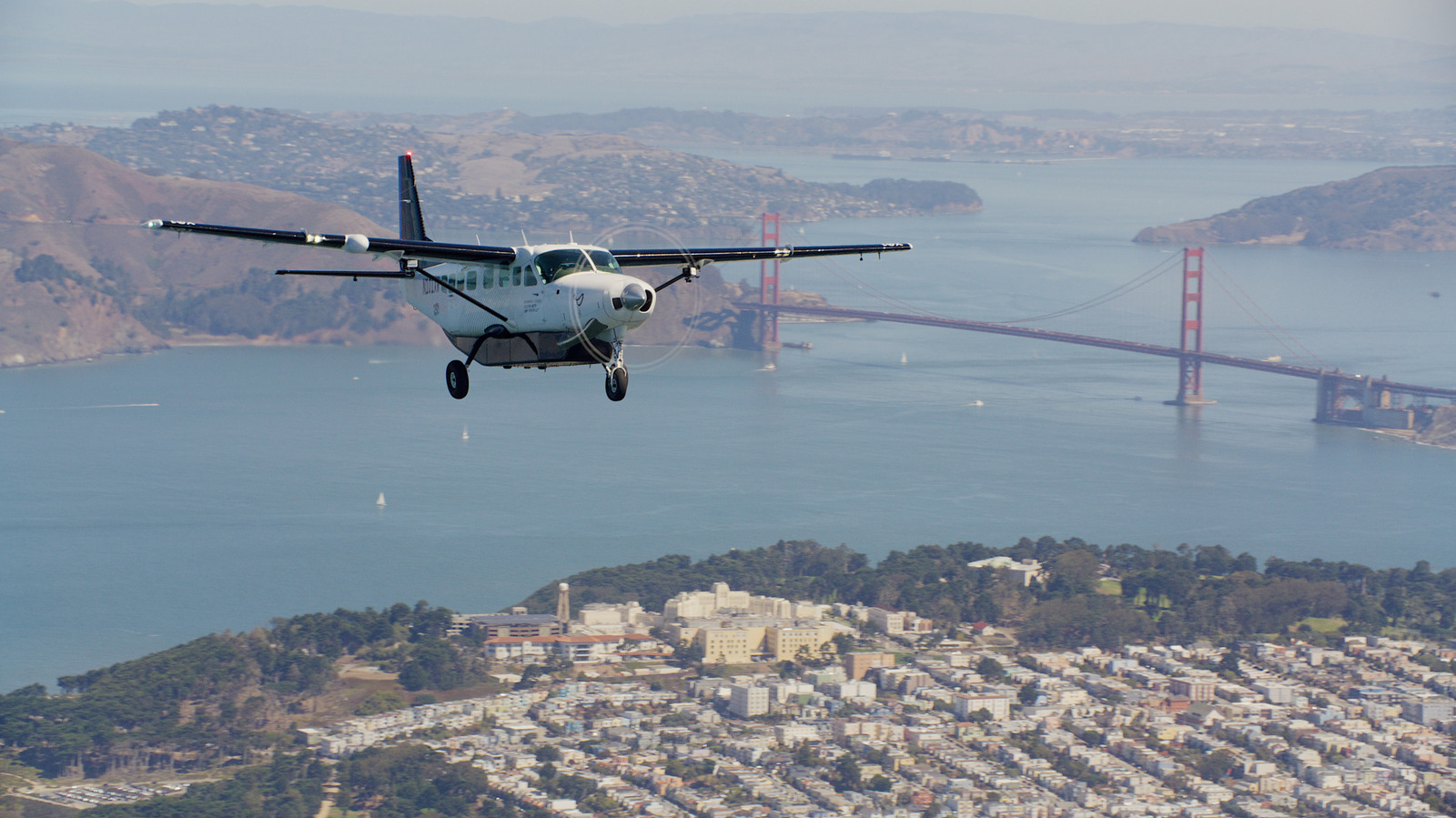
Joby Aviation autonomous flight achieved a 3,199-mile, fully self-piloted crossing of the United States on Sept. 20, 2026. The converted Cessna Caravan lifted off from Buchanan Field Airport in California and touched down at Dare County Regional Airport in North Carolina without any human control inputs. This test moves the company beyond electric air-taxi demos toward a broader autonomous aviation platform that could serve freight, emergency response and defense logistics.
Technical architecture of the autonomy stack
Joby’s autonomy suite fuses lidar, radar, GNSS and visual-inertial cameras into a redundant flight-control computer running a custom real-time operating system. Sensor data are fused at 200 Hz to produce a high-definition situational model that feeds a model-based predictive controller. The controller issues actuator commands for throttle, elevator, aileron and rudder, handling every phase of flight. A safety pilot remained on board as a monitor, but no control inputs were required. Remote supervisors at Joby’s California headquarters and at Shaw Air Force Base in South Carolina observed telemetry in real time, ready to intervene if the system flagged an anomaly.
Flight profile and operational details
The aircraft taxied out autonomously, accelerated down the runway and lifted off at a calculated rotation speed of 78 kt. During cruise the system maintained 210 kt, optimizing fuel burn while respecting air-traffic-control (ATC) constraints. At each waypoint the autonomy software negotiated clearances with ATC via a data-link interface, demonstrating compliance with existing FAA protocols for unmanned aircraft systems (UAS). The final approach and landing were executed with a precision of ±5 ft from the runway centreline, matching or exceeding human pilot performance on comparable routes.
Regulatory context and FAA interaction
Joby operated under a special experimental certificate granted by the FAA for autonomous flight testing. The certificate required a human monitor on board and a ground-based safety team, both of which Joby satisfied. The successful coast-to-coast flight provides data that could inform future rulemaking on fully autonomous commercial operations, a topic the FAA is currently reviewing under its UAS Integration Office. For more on FAA policy see FAA policy page.
Strategic implications for Joby’s air-taxi business
Joby is best known for its electric air-taxi service, which it began demoing in New York City in April 2026 and plans to launch commercially later this year. The autonomous flight demonstrates that the company’s AI stack can be decoupled from its proprietary eVTOL airframe and applied to legacy aircraft. This flexibility opens revenue streams beyond passenger transport, including time-critical freight, disaster-relief supply runs and defense logistics. By validating the autonomy software on a certified platform, Joby reduces the certification burden for future eVTOL deployments.
Market reaction and competitive landscape
Analysts note that the autonomous-flight achievement could accelerate investment in hybrid-autonomy solutions, where a human pilot remains on board for regulatory comfort while the AI handles routine phases. Competitors such as Archer Aviation and Lilium have focused on fully piloted eVTOLs; Joby’s dual-track approach may give it a competitive edge in markets that demand both passenger service and cargo capability. Venture-capital activity in autonomous aviation has risen 27 % year-over-year, and Joby’s demonstration is likely to attract additional funding for scaling its autonomy platform.
Expanded analysis: incentives, risks and next steps
The primary incentive for Joby is to create a reusable autonomy layer that can be licensed to third-party operators, turning the software into a revenue-generating asset independent of aircraft manufacturing. However, the reliance on a safety pilot and ground-based supervision introduces latency risks if multiple flights are managed simultaneously. Weather resilience remains a gap; the flight avoided low-visibility conditions, and the system’s performance in icing or severe turbulence is unproven. Regulators may impose stricter data-recording requirements before granting full commercial certification, which could slow rollout.
Stakeholders to watch include logistics firms seeking rapid point-to-point delivery, disaster-response agencies that could benefit from crew-less supply drops, and the Department of Defense, which has expressed interest in autonomous cargo resupply. The next milestone will be a westward return leg with scheduled pit stops in Raleigh, NC; Salt Lake City, UT; and Portland, OR, to gather data across varied airspace environments. Integration of the autonomy stack into Joby’s own eVTOL prototypes is slated for the next two years, aiming for mixed-crew-less operations.
Potential use cases beyond urban air mobility
Joby’s press release highlighted three target sectors: commercial freight, emergency response and defense logistics. In freight, point-to-point autonomous flights could cut delivery times for high-value, time-sensitive goods, especially to remote airports lacking ground infrastructure. For emergency response, autonomous aircraft could deliver medical supplies or evacuate patients from disaster zones where pilot fatigue or hazardous conditions are concerns. Defense logistics could benefit from autonomous cargo runs that reduce personnel exposure in contested airspace.
What remains unconfirmed
While the flight proved the autonomy stack’s core capabilities, several questions remain. The system’s performance in adverse weather—particularly low-visibility conditions—was not disclosed. The FAA’s timeline for approving fully autonomous commercial operations is still uncertain, and the requirement for an onboard safety pilot may persist for the near term. Additionally, the scalability of remote supervision across multiple simultaneous flights has yet to be demonstrated.
Industry outlook
The successful autonomous coast-to-coast flight underscores a broader shift toward AI-driven aviation. As sensor costs fall and compute efficiency improves, more operators will experiment with retrofitting existing fleets. The convergence of electric propulsion and autonomy could reshape the economics of short-haul air transport, making on-demand cargo and passenger services viable in markets previously considered too thin for traditional airlines.
Related reading
For a deeper look at how consumer devices are becoming universal remote controls, see the recent analysis of Google TV and Apple Remote Features Turn Phones Into Universal TV Remotes.
What sensors enable Joby’s autonomous flight?
Joby’s platform fuses lidar, radar, GNSS and visual-inertial cameras to create a 3-D map of the environment, feeding a high-rate estimator that drives the flight-control computer.
How does the autonomy system interact with ATC?
The system uses a data-link interface to submit flight plans, receive clearances and report position updates, complying with existing FAA data-link protocols for unmanned aircraft.
Will Joby’s air-taxi fleet become fully autonomous?
Joby intends to first certify its autonomy stack on legacy aircraft before migrating it to its eVTOLs; a fully pilot-less commercial service is still several years away pending regulatory approval.
Related coverage
- Android Gaming Phone Specs: What to Look for in a Premium Device
- Smart TVs Aren’t Enough: Why Streaming Devices Remain Essential in 2026
- Slate Truck EV: Affordable Pickup with Limited Range