AI Data Center Accountability in Focus
The June 2026 blaze at Lake Mariner illustrates why AI data-center accountability matters. Within the first 100 words we see missing alarms, dead hydrants, and burned safety sheets that left firefighters "blind" and raised immediate questions about who bears responsibility when a multi-billion-dollar AI campus fails basic safety standards.
Safety Gaps Exposed by the Lake Mariner Fire
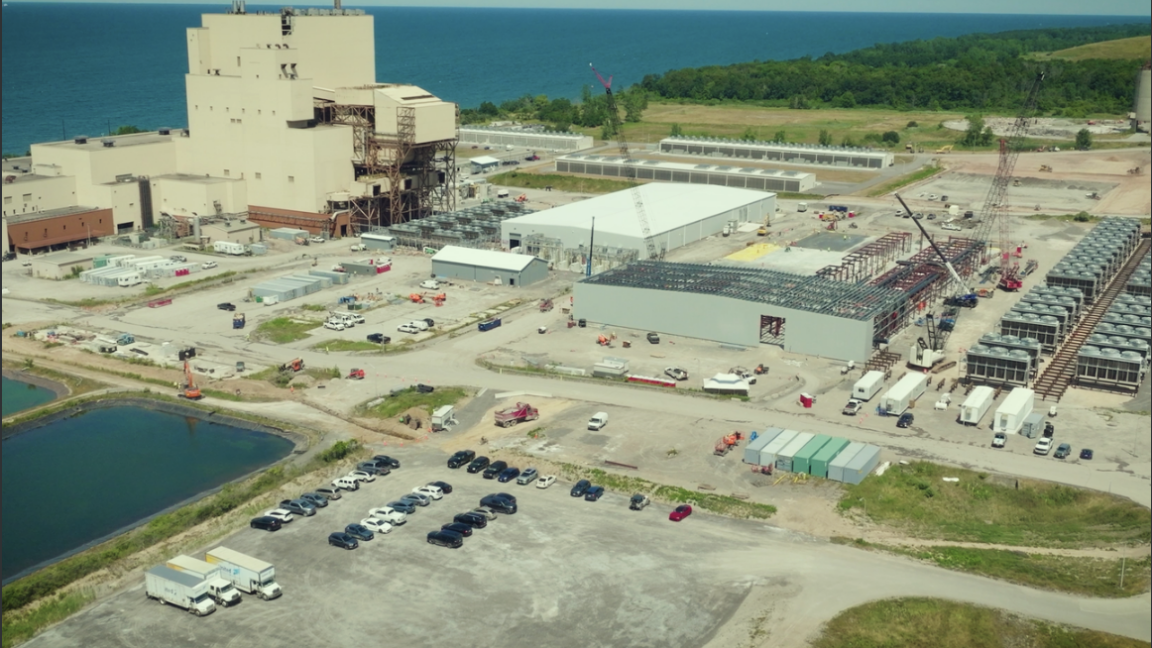
In early June a fire erupted in the unfinished Lake Mariner facility in Somerset, New York. Firefighters arrived to a building shrouded in black smoke, no audible alarm, and three non-functional hydrants. The safety data sheets that should have listed on-site chemicals were said to have burned, leaving the Barker Fire Department "kind of blind," according to chief Steve Matisz. The incident shows that safety plans often exist only on paper.
Complex Corporate Structure Behind a $3.2 B Campus
Lake Mariner is not a single-owner project. TeraWulf, a crypto-mining firm turned data-center operator, leases the 200-acre former coal-mine from Somerset Operating Company, an entity owned by TeraWulf CEO Paul Prager. Fluidstack, a UK-based AI startup, will run the compute workloads. Google holds warrants for a future 14 % equity stake and has agreed to guarantee Fluidstack’s lease payments. Anthropic, a leading foundation-model developer, is a primary compute customer. This tangled ownership creates four layers of responsibility: legal liability for accidents, operational control of safety systems, financial backing of the build-out, and reputational stewardship of grid and water impacts.
Operational Claims vs. On-Ground Reality
TeraWulf’s chief strategy officer Kerri Langlais told reporters the company is "responsible for operational safety and emergency preparedness," citing the installation of Knox boxes, additional hydrants, and "go-bag" safety data sheets after an after-action review. When the Barker chief revisited the site in mid-August, he noted that the hydrants remained dry and no visible work had been completed. A Knox-box representative had visited, and a meeting was scheduled, but the physical upgrades lagged behind the paperwork.
Job Promises and Delivered Employment
The original 2019 proposal promised 165 permanent jobs and $85 million in capital investment. A 2024 planning-board slide from TeraWulf’s project manager now lists only 35-40 staff once the facility reaches its full 500 MW capacity. The discrepancy has drawn criticism from Somerset town supervisor Jeffrey Dewart and Governor Kathy Hochul, who recently placed a moratorium on hyperscaler data-center development and warned that "data centers do not deliver significant, long-term jobs."
Grid Costs and the Socialization of Power
A 500 MW AI facility draws near-constant power, forcing the New York Power Authority (NYPA) to run expensive peaker plants and upgrade transmission lines. Political scientist Leah Stokes notes that "when you have a really big load, especially if it’s 24/7, 365, the whole system gets more expensive," and those costs appear on every consumer’s electricity bill, regardless of whether they benefit from the AI compute.
Anthropic’s Energy Commitment – A Partial Remedy
In February 2026 Anthropic announced a covenant to cover electricity-price increases caused by its data-center footprint, pledging to fund 100 % of grid-infrastructure costs and to procure new generation capacity. Lake Mariner falls under that pledge, but the commitment stops at electricity pricing; it does not address noise, local water usage, or broader environmental externalities.
Regulatory Landscape and Watchpoints
NYPA conducts annual compliance reviews and can adjust the site’s tax benefits if TeraWulf fails to meet its job-creation or capital-investment promises. Governor Hochul’s moratorium signals heightened scrutiny of future AI-data-center projects, especially those that rely on public incentives. Watch for: (1) NYPA’s next compliance report, (2) any formal amendment to the Anthropic covenant that expands beyond electricity costs, and (3) local fire-department audits that could force retrofits of alarms and hydrants.
Implications for Developers and Operators
For AI startups, the Lake Mariner case illustrates that "operational safety" clauses in lease agreements may not translate into on-site reality without enforceable penalties. Companies that rely on third-party data-center operators should audit safety certifications themselves, not assume the operator’s statements are sufficient. The diffusion of responsibility also complicates liability insurance; insurers may demand joint-and-several coverage from all equity stakeholders, including Google and Anthropic.
Community Impact and the Push for Transparency
Local residents have repeatedly requested a town-board meeting with TeraWulf, but the company’s communications team remains silent. The lack of transparency fuels distrust, especially as the project’s water draw from Lake Ontario strains local supplies. Community groups are now lobbying for mandatory public disclosure of safety data sheets and real-time hydrant status, a demand that could become a model for future AI-data-center siting.
Technical Context: Power Density and Cooling Challenges
A 500 MW AI campus typically houses thousands of GPUs or custom ASICs, each drawing 300-500 W. To sustain such density, Lake Mariner relies on a hybrid cooling system that mixes direct-liquid cooling for high-performance racks with traditional chilled-water loops for bulk heat removal. Early reports suggest a possible electrical fault in a high-voltage distribution panel—an area where liquid-cooling infrastructure and high-current cabling intersect.
Trusted Outbound Context
For a broader view of New York’s utility policies, see the NYPA utility policy overview.
Key takeaways: The Lake Mariner fire reveals a fragmented AI data-center accountability model, a shortfall in promised local jobs, and a growing tension between private AI compute demand and public utility costs. Stakeholders should monitor NYPA compliance reports, enforce transparent safety audits, and demand that energy-payout pledges expand beyond electricity pricing to address full community impact.
Related coverage
- Figma AI security agents automate security operations
- Tetris copyright dispute: The Tetris Company Denies Involvement in White House Game
- Windows storage management: How to see what's taking up space on your PC