Core Announcement
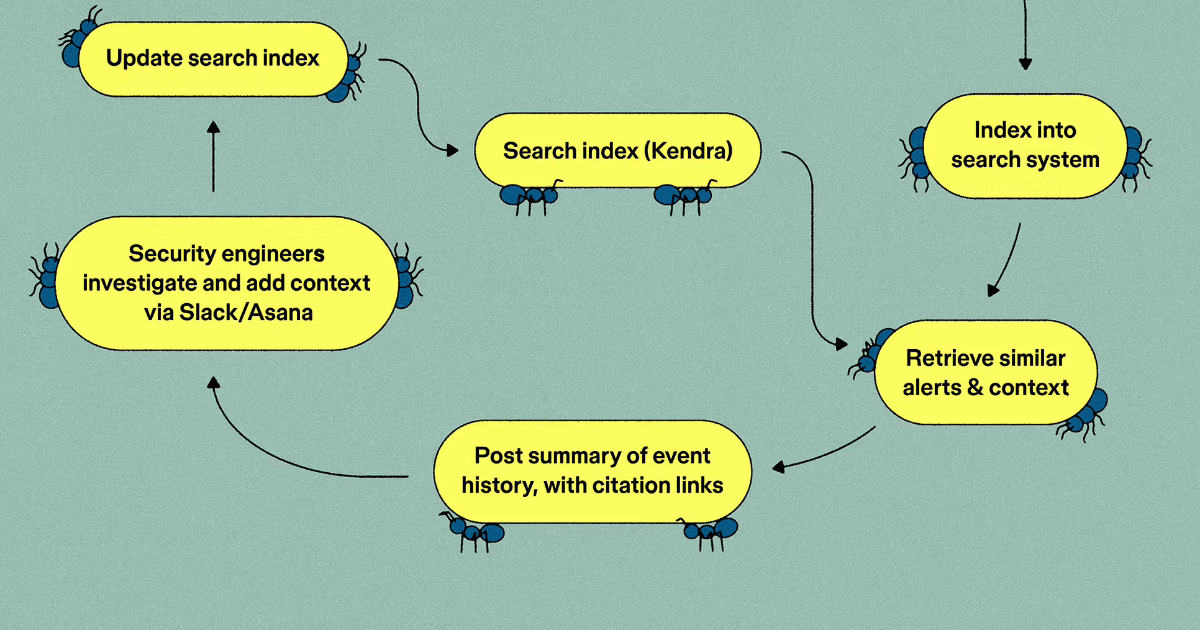
Figma announced that its security team now relies on a suite of internally-built AI agents to automate the investigation of alerts, retrieve historical incident data, verify system configurations, and even draft code fixes for vulnerabilities. The system, described in a recent InfoQ post, connects large language models (LLMs) with Figma’s own tooling stack, allowing the agents to act as autonomous assistants that reduce the mean time to investigate (MTTI) from hours to minutes.
Figma AI security agents Overview
The agents are orchestrated through a lightweight micro-service layer that routes security-related queries to a fine-tuned LLM hosted on dedicated GPU instances. Each agent runs on an NVIDIA H100 accelerator, delivering up to 2 TFLOPs of tensor performance per instance, which enables sub-second response times for code-generation prompts. The LLM, a 13-billion-parameter transformer, has been further trained on Figma’s internal security corpus, including past incident reports, CVE descriptions, and proprietary code-review comments.
A custom "security-context injector" enriches prompts with real-time data from Figma’s observability platform (Prometheus metrics, Loki logs, and Jaeger traces). This ensures that the model’s output reflects the current state of the production environment rather than a static knowledge base. The agents also employ a sandboxed execution environment that validates generated patches against static analysis tools such as CodeQL before presenting them to human reviewers.
Operational Impact
According to the report, the AI-driven workflow has cut average alert triage time from 45 minutes to under 5 minutes for routine findings such as misconfigured IAM policies or exposed S3 buckets. For higher-severity incidents, the agents provide a preliminary hypothesis and a draft remediation script, which security engineers can approve or adjust. Early metrics indicate a 30 % reduction in post-mortem turnaround, as the agents automatically compile incident timelines and relevant code diffs.
The automation also frees senior security analysts to focus on strategic threat modeling rather than repetitive ticket handling. Figma estimates that the agents have processed over 1,200 alerts in the first month of production, with a false-positive rate of roughly 8 %, comparable to human triage performance.
Risk and Governance
While the agents accelerate response, they introduce new governance challenges. The reliance on LLM-generated code raises concerns about inadvertent introduction of subtle bugs or back-doors. To mitigate this, Figma enforces a multi-stage review pipeline: the AI-produced patch first passes through static analysis, then a peer code review, and finally a manual security audit before deployment.
Data privacy is another vector; the agents ingest logs that may contain user-identifiable information. Figma’s engineering team has implemented on-device tokenization of PII before it reaches the LLM, aligning with GDPR-style data minimization principles. Additionally, the company logs every LLM request and response in an immutable audit trail, enabling forensic review if a remediation later proves insufficient.
Market and Ecosystem Implications
Figma’s deployment signals a broader trend where SaaS providers embed AI assistants directly into their security operations centers (SOCs). Competitors such as Atlassian and GitHub have hinted at similar capabilities, but Figma’s public documentation provides one of the first concrete technical roadmaps. The move could accelerate the adoption of "AI-augmented SOCs" in the enterprise market, prompting security vendors to offer tighter integrations with LLM back-ends.
From an ecosystem perspective, the approach blurs the line between DevSecOps tooling and generative AI platforms. Vendors that supply GPU-optimized inference servers may see increased demand, while cloud providers could monetize dedicated "security-agent" instances. The shift also raises regulatory questions: if an AI agent suggests a remediation that later proves insufficient, liability may fall on the organization rather than the model provider.
Comparative Landscape
Figma’s architecture mirrors the zero-trust model for AI agents championed by Google, where each request is authenticated, authorized, and audited at the micro-service level. In contrast, Anthropic’s recent lawsuit over internal chat data highlights the legal complexities of training proprietary models on sensitive security logs. Figma’s strict data-tokenization pipeline appears designed to avoid similar pitfalls.
What to Watch Next
The next phase for Figma involves extending the agents beyond triage to full-cycle incident response, including automated containment actions such as revoking compromised tokens. Monitoring the false-positive trend as the model encounters novel attack patterns will be critical. Industry observers will also track how Figma balances speed with auditability, especially as regulators begin to scrutinize AI-generated code in security contexts.
Stakeholders—including security engineers, compliance officers, and cloud-infrastructure teams—should evaluate whether integrating similar AI agents could streamline their own workflows, while also preparing governance frameworks to address the new risk surface.
This analysis is based on the InfoQ report on Figma’s AI security agents.
Related coverage
- Bluetooth Security: Is It Safe to Leave Your Phone’s Bluetooth On All the Time?
- Why Faster GPUs Won’t Solve AI Inference Bottlenecks
- Ukraine’s Drone Data Marketplace Fuels AI Training and Raises Regulatory Alarm