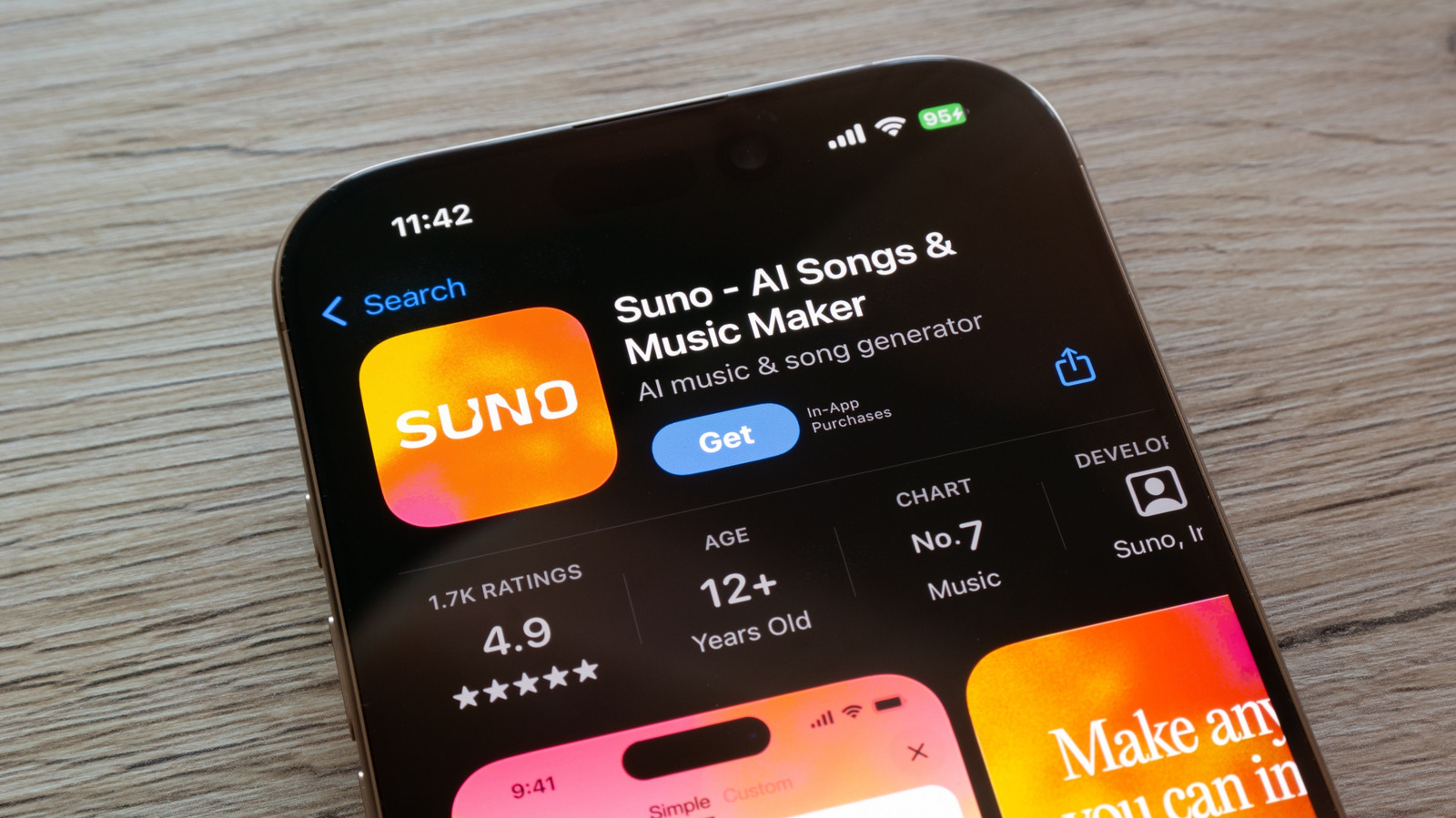
Core allegation – unlicensed training on user interactions
The Suno v6 copyright lawsuit began when Sony Music Entertainment and Universal Music Group filed a federal complaint in the Southern District of New York. Plaintiffs assert that Suno harvested "users' interactions" – outputs of earlier Suno models and the preference signals users gave to those outputs – to fine-tune v6. They claim those interactions contain copyrighted audio from over 60,202 recordings that Suno never licensed, potentially triggering statutory damages of up to $9 billion. The complaint also cites alleged YouTube-scraping violations and links to the original Engadget report (Engadget).
Technical backdrop – how AI music models learn
Modern generative music systems like Suno’s v6 use transformer-based architectures with parameter counts in the low-hundreds of millions. Training pipelines ingest two streams: (1) licensed corpora that provide high-quality reference material, and (2) user-generated interaction logs that encode preference gradients such as likes, skips, and remix requests. The legal question centers on whether aggregated interaction logs constitute a separate copyrighted dataset. If the logs contain raw audio snippets reproduced by earlier models, they may be treated as derivative works, a nuance that courts have yet to resolve in the AI domain.
Financial exposure – damages calculus
Under the Copyright Act, each infringed sound recording can attract up to $150,000 in statutory damages for willful infringement. Multiplying that ceiling by the 60,202 recordings cited by the plaintiffs yields a theoretical exposure of $9.03 billion. In addition, the complaint references potential DMCA anti-circumvention penalties of $2,500 per alleged YouTube violation. While these figures represent maximums, they illustrate the magnitude of risk for AI startups that rely on large-scale data scraping.
Suno’s counter-argument – licensed content and community signals
Suno has publicly rejected the claims, describing them as "fundamentally flawed on both the facts and the law." The company emphasizes that v6 was trained on content explicitly licensed from Warner Music Group, BMG and Believe, and that user interaction data were aggregated, anonymized preference signals rather than raw audio files. Suno’s legal team argues that such signals fall under fair use because they are transformative and do not reproduce the original recordings in a recognizable form. This defense mirrors arguments made by other generative-AI firms, but judicial guidance on fair-use applicability to large-scale model training remains limited.
Precedent landscape – prior suits and data breaches
The current filing builds on an earlier 2026 lawsuit by Sony, UMG and Warner Music Group against Suno, which alleged systematic scraping of millions of songs from YouTube Music, Deezer and Genius. A July 2026 security breach confirmed that Suno’s internal data lake contained scraped audio and lyric files, lending credence to the plaintiffs’ narrative. Those earlier cases settled out of court without admissions of wrongdoing, leaving the legal question of whether scraped data can be retroactively licensed unresolved. An independent report by Music Business Worldwide documented the breach and its impact on industry negotiations (Musicbusinessworldwide).
Industry ripple effects – licensing models and developer ecosystems
If the court sides with the record labels, AI music generators may be forced to adopt stricter data-curation pipelines, potentially requiring per-track licensing fees or royalty-sharing mechanisms embedded in model APIs. That shift could raise the cost of entry for startups and push developers toward open-source datasets that are explicitly cleared for commercial use. Conversely, a ruling favoring Suno could embolden other firms to rely on user-generated interaction data, accelerating model iteration but also increasing regulatory scrutiny.
What to watch – next legal milestones
The lawsuit is expected to proceed to a summary-judgment motion by early 2027. Key indicators will include the court’s interpretation of "interaction data" as a copyrighted work, the application of DMCA anti-circumvention provisions to the alleged YouTube scraping, and any settlement offers that might introduce industry-wide licensing frameworks for AI-generated music. Stakeholders—including music publishers, AI developers, and platform operators—should monitor filings in the Southern District of New York.
Broader regulatory context – AI and copyright policy
Congressional hearings on AI-generated content are slated for late 2026, and the Copyright Office is expected to release draft guidance on training-data provenance. The Suno v6 copyright lawsuit could become a reference point for policymakers drafting statutory amendments that clarify the status of user-generated signals. Industry groups such as the Recording Industry Association of America have already called for a "clear-cut licensing regime" that would require AI firms to obtain explicit permissions before ingesting any copyrighted audio, even in aggregated form.
Original analysis – incentives, risks, and likely changes
From Suno’s perspective, the incentive to use interaction data is clear: it provides a low-cost feedback loop that improves model fidelity without negotiating additional licenses. The risk, however, is exposure to massive liability that could cripple the company’s ability to raise capital. For record labels, aggressive litigation serves both as a deterrent and as leverage to extract higher licensing fees from AI firms. The likely next step is a hybrid licensing model in which AI providers pay per-use royalties tied to the volume of generated content, similar to the mechanical-licensing frameworks used for streaming services. This approach would align incentives, reduce litigation risk, and create a predictable revenue stream for rights holders.
Practical takeaways for developers
- Audit data pipelines: Ensure every audio file ingested has a documented license or falls under a defensible fair-use analysis.
- Separate interaction logs: Store preference signals in a way that they cannot be reverse-engineered into raw audio.
- Engage legal counsel early: Involve IP counsel during model design to pre-empt litigation risk.
- Monitor policy updates: The upcoming Copyright Office guidance may impose new compliance checkpoints for AI training data.
A litmus test for AI-music convergence
The Suno v6 copyright lawsuit crystallizes the tension between rapid AI innovation and entrenched music-rights ecosystems. The outcome will likely dictate whether future generative-music platforms can rely on community-driven data or must pivot to fully licensed, royalty-tracked corpora. For now, Suno’s claim of a "licensed-first" approach remains contested, and the $9 billion damage ceiling underscores the high stakes of data-centric AI development.
Read more about AI-music licensing trends
Related coverage
- iPhone 18 Pro vs Pro Max: Why the Smaller Model Wins in 2026
- Apple Beats gaming controller rumored for iPhone launch
- GPT-6 Astra Critical cybersecurity Rating Sets New Safety Benchmark