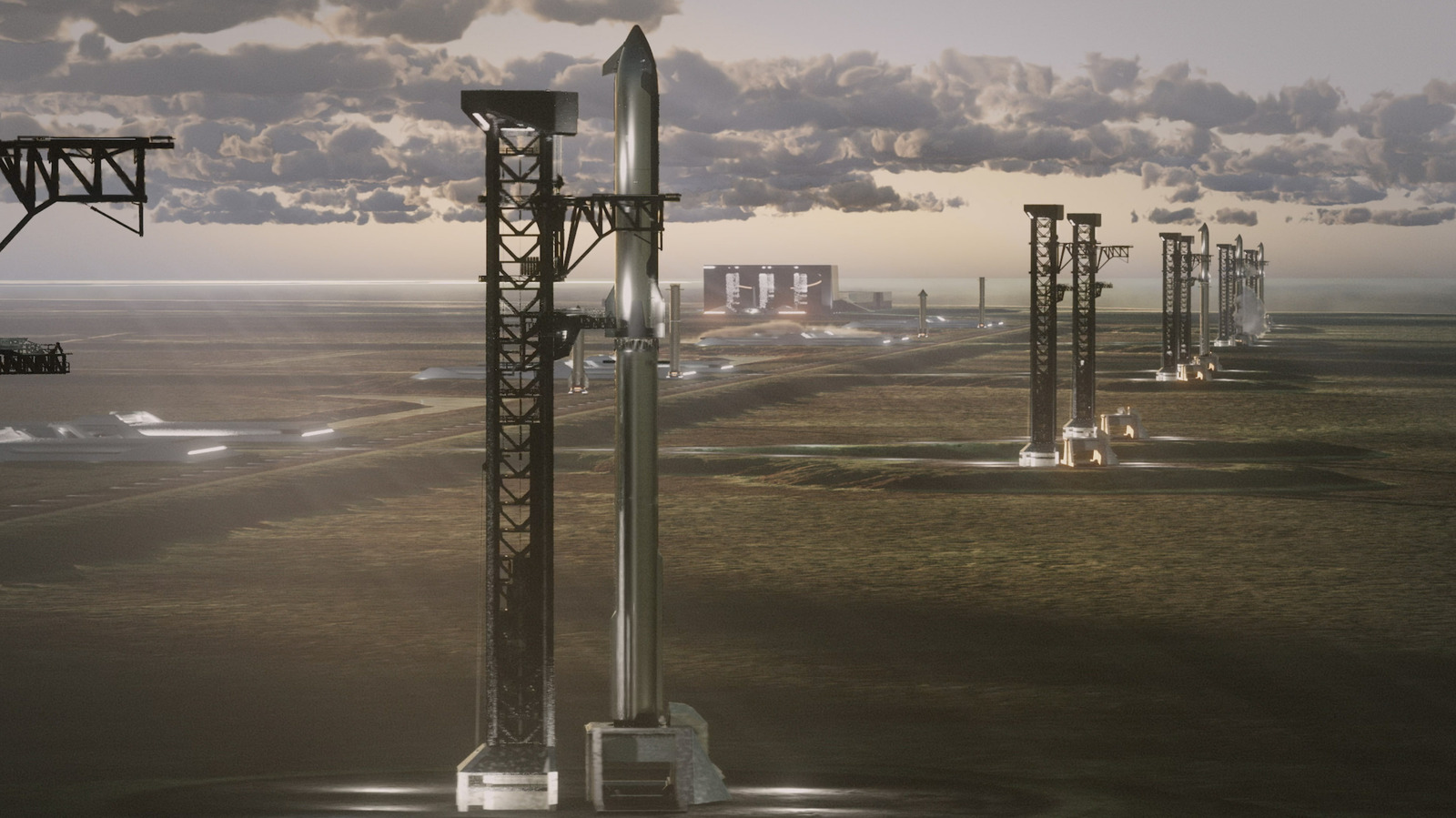
SpaceX Starbase Louisiana represents a $100 billion investment that will reshape heavy-lift launch economics on the Gulf Coast. The project covers 125,000 acres on Pecan Island and is designed to support rapid, high-frequency Starship operations for lunar, Martian, and polar-orbit missions.
Overview of the SpaceX Starbase Louisiana Site
- Land footprint: 195 square miles (approximately 125,000 acres) reclaimed from former Exxon Mobil holdings.
- Launch infrastructure: Five distinct launch complexes, each with two pads, enabling simultaneous processing of multiple Starships.
- Support systems: On-site liquid methane plant, renewable-heavy power grid, cryogenic storage, vehicle processing bays, and a residential enclave for up to 2,000 employees and families.
- Strategic advantage: The southern latitude provides clear southward trajectories over the Gulf, ideal for polar and high-inclination orbits without overflying populated areas.
Methane Fuel Strategy and Polar Access
SpaceX will source methane from nearby natural-gas fields, converting it to liquid methane on site. This reduces logistics costs, lowers carbon intensity relative to imported propellants, and creates a regional petrochemical hub. The methane supply chain also includes carbon-capture pilots to mitigate price volatility. The site’s position enables direct polar launch corridors, supporting constellations that require global coverage with minimal plane-change maneuvers.
Economic Incentives and State Partnership
Louisiana Governor Jeff Landry negotiated a lease that grants SpaceX exclusive development rights in exchange for extensive environmental remediation. The state will receive $2 billion in direct payments over ten years, plus job creation estimates of 5,000 construction jobs and 1,200 permanent positions. In return, SpaceX must restore 1.5 million square feet of marshland, construct levees, and fund a hurricane-resilience research program administered by the Louisiana Department of Environmental Quality.
Regulatory Context and Risk Management
The conditional lease sets a precedent for coastal spaceport approvals. It requires quarterly environmental impact reports, independent third-party audits of marshland restoration, and compliance with FEMA flood-zone standards. Risks include potential litigation from NGOs concerned about coastal erosion, and the inherent vulnerability of Gulf-coast infrastructure to hurricanes. SpaceX plans hardened concrete shelters for launch pads and rapid-recovery protocols, but performance data remain unpublished.
Timeline and Milestones
- 2027: Groundbreaking, site grading, utility installation, and start of methane plant foundations.
- 2028: Completion of two launch complexes, verification of methane production capacity (target 1 million kg/month).
- 2029: First orbital Starship launch from Pad 1, carrying a mixed payload of satellite buses and a test crew capsule.
- 2030-2035: Scale-up to 5,000+ Starship flights per year, supporting lunar logistics, Mars cargo, and the emerging Starmind satellite network.
Strategic Implications for the Space Industry
The presence of SpaceX Starbase Louisiana intensifies competition with Boeing’s Texas launch site and Blue Origin’s Colorado depot. On-site methane production could catalyze a regional supply chain for cryogenic storage, high-pressure pipelines, and carbon-capture technologies, attracting ancillary firms and creating new economic clusters. The regulatory model may be replicated by other coastal states seeking to balance economic development with climate-resilient land use.
Original Analysis: Incentives, Consequences, and What Changes Next
SpaceX’s decision to locate a $100 billion Starbase in Louisiana is driven by three converging incentives: (1) proximity to cheap natural-gas feedstock, (2) a launch corridor that avoids overflight of dense populations, and (3) a state partnership that offsets a portion of the capital outlay through tax incentives and direct payments. The consequence is a shift in the aerospace supply chain toward the Gulf Coast, potentially displacing traditional aerospace hubs in Florida and California. However, the concentration of launch activity in a hurricane-prone region introduces systemic risk; a single Category 4 storm could disrupt launch cadence for months, affecting satellite operators and defense contracts. Mitigation will require robust hardening measures and diversified launch windows, which SpaceX is addressing through modular pad designs and rapid-recovery shelters. Looking ahead, the success of the on-site methane plant will be a bellwether for the viability of carbon-neutral propellant strategies across the industry.
What to Watch Next
- Regulatory filings: The next quarterly report from the Louisiana Public Service Commission will detail the final environmental impact statement and any additional mitigation requirements.
- Methane plant performance: The first full-scale test of the on-site liquefaction facility, expected in Q3 2028, will reveal whether the fuel supply can sustain the projected launch cadence.
- Commercial contracts: Upcoming SEC disclosures will show the volume of launch service agreements signed by satellite operators and defense customers.
- Infrastructure resilience: Post-hurricane assessments after the 2029 season will provide data on pad hardening effectiveness and recovery timelines.
Internal reference: For related coverage of SpaceX’s launch infrastructure strategy, see our analysis at /technology/space.
Related coverage
- Google Search home decor: 5 ways to upgrade your space
- Instagram teen safety data: why Mosseri’s surprise matters
- World Humanoid Robot Games 2026: Robots Shatter Sprint Records and Ignite on Track