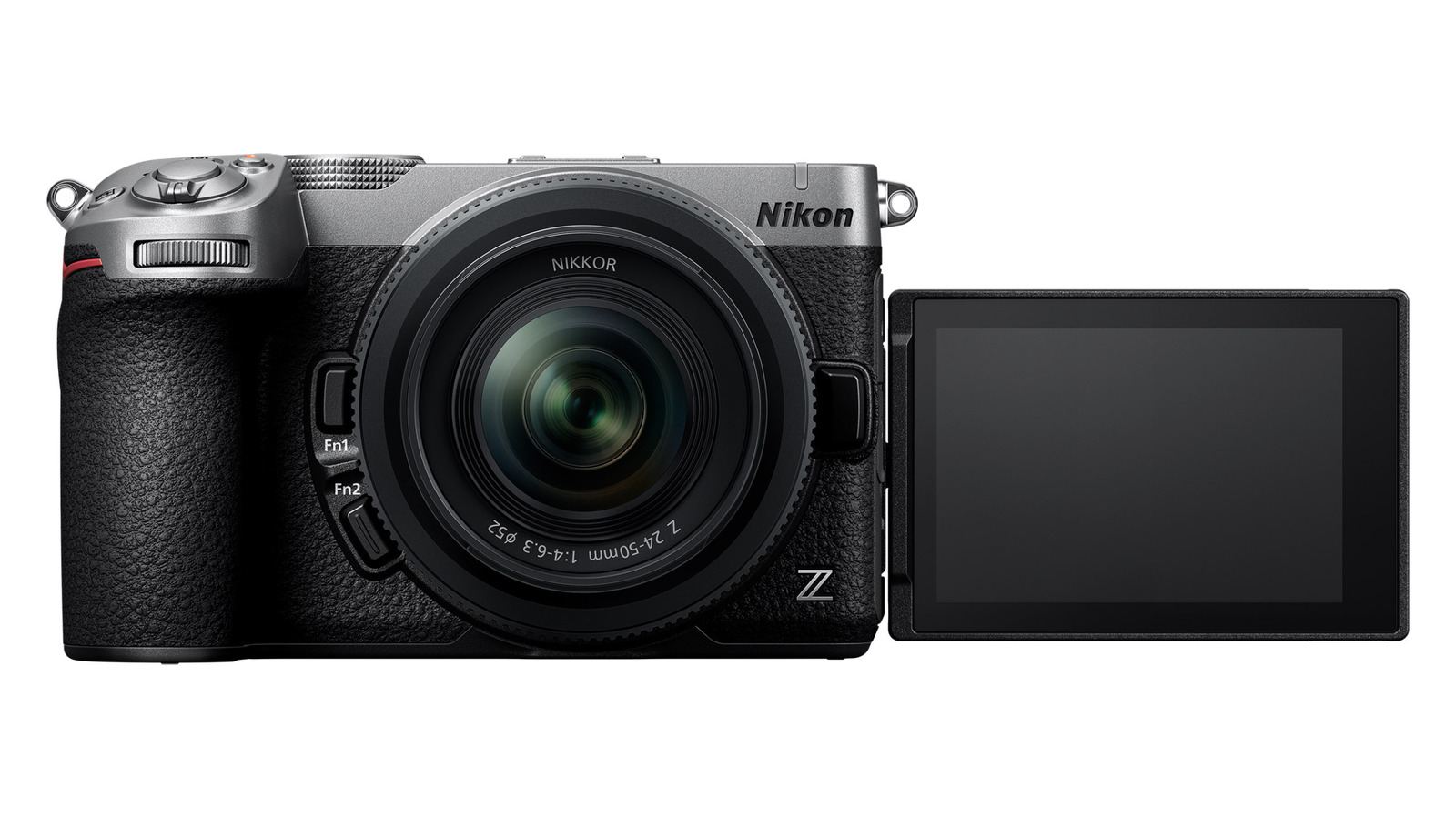
Nikon Z5 IIC unveils a compact full-frame for creators
Nikon announced on Sept. 24, 2026 that the Nikon Z5 IIC, a stripped-down version of the Z5 II, will ship at a base price of $1,400 USD (body only). By eliminating the electronic viewfinder (EVF) and a few control knobs, the company reduced the camera’s mass to 537 g, roughly 25% lighter than the 700 g Z5 II, and cut the retail cost by about $300. The move targets vloggers and entry-level full-frame users who prioritize a flip-out screen over an EVF.
Nikon Z5 IIC core specifications retained despite the price cut
The Z5 IIC inherits the Z5 II’s 24-megapixel full-frame BSI sensor, 7.5-stop in-body image stabilization (IBIS), and the same EXPEED 7 image-processing engine. Video capabilities remain robust: 4K 30 fps recorded from the full sensor width, and 4K 60 fps with a 1.5× crop, both available in Nikon’s N-RAW format with N-Log color grading or H.265 compression. Autofocus mirrors the Z5 II’s subject-detection suite, covering humans, animals, birds, vehicles, and the newly added fish mode. Continuous shooting reaches 14 fps (RAW/JPEG) with AF tracking, and 30 fps (JPEG only) in electronic-shutter mode.
The rear display is a 3.2-inch, 1,040 K-dot touchscreen that articulates fully, a feature prized by solo creators. A single UHS-II SD slot replaces the dual slots of the Z5 II, a compromise that may affect professional workflows but keeps costs down. The camera also offers a suite of creator-focused modes: product-review focus switching, 15 scene presets, RED-derived imaging recipes, waveform monitoring, focus peaking, and zebra patterns.
Pricing strategy and market positioning
At $1,400, the Z5 IIC undercuts most full-frame competitors, including Sony’s A7 IV and Canon’s EOS R8, which sit above $1,800 for comparable sensor resolutions. Nikon frames the model as a “compact” (hence the “C”) alternative for creators who can live without an EVF. The price point aligns with the ongoing inflation in camera equipment, offering a viable entry point for hobbyists transitioning from APS-C or crop-sensor mirrorless bodies.
A bundled option adds the Z 24-50 mm f/4.3-5.3 kit lens for $1,700, delivering a versatile focal range for everyday shooting and vlog work. The single-card slot may limit professional users who rely on redundant recording, but for the target audience—content creators, travel photographers, and enthusiasts—the trade-off appears acceptable.
Technical implications of dropping the EVF
EVFs are among the most expensive components in mirrorless cameras, often accounting for 15-20% of a unit’s bill of materials. By removing it, Nikon not only reduces manufacturing cost but also frees up internal space, allowing a slimmer chassis and lower overall weight. However, the loss of an EVF removes a high-resolution, low-latency viewfinder that many photographers rely on for bright-light shooting and precise composition. The Z5 IIC therefore leans heavily on its high-resolution touchscreen, which may be less comfortable for extended handheld use in bright environments.
Who benefits and who may be left out
Content creators who film themselves will find the fully articulating screen and on-camera REC indicator valuable. The inclusion of RAW video and N-Log gives them a post-production workflow comparable to higher-priced cinema-grade cameras. Photographers who depend on an EVF for fast action or outdoor shooting may find the Z5 IIC limiting, pushing them toward the full-feature Z5 II or other models.
The single-card slot also narrows the camera’s appeal for professional videographers who require simultaneous backup recording. Nikon’s decision suggests a clear segmentation: the Z5 II remains the workhorse for pros, while the IIC serves the growing market of solo creators and budget-conscious enthusiasts.
Market ripple effects and future outlook
Nikon’s price-cut strategy could pressure rivals to introduce lower-priced full-frame options or to offer EVF-less variants. Sony and Canon have historically bundled EVFs as standard on full-frame mirrorless bodies, but the success of the Z5 IIC may encourage them to explore “compact” sub-lines. Additionally, the move underscores a broader industry trend: manufacturers are stripping down high-end features to meet the demand for affordable, creator-centric gear.
Regulatory considerations remain minimal; the camera complies with existing FCC and CE standards. However, the inclusion of RAW video and advanced autofocus may attract scrutiny from platforms that enforce codec or bitrate limits, though Nikon’s support for H.265 should mitigate most compatibility concerns.
What to watch next
Monitor pre-order stock levels, as Nikon’s limited-run approach often leads to early sell-outs. Expect early reviews to compare low-light performance against the Z5 II, focusing on shared sensor and ISO range up to 64,000. Watch how the market reacts to the single-card slot; creator preference for redundancy versus cost will shape future iterations.
For a broader view of how camera manufacturers are adapting to creator demands, see the recent analysis of Meta’s camera-free Ray-Ban Audio glasses.
What does removing the EVF mean for battery life?
Without an EVF, the Z5 IIC relies solely on the LCD for composition, which typically consumes less power than an EVF. Early tests suggest a modest increase in shooting time per charge, though exact figures will depend on usage patterns.
Is the Z5 IIC compatible with existing Z-mount lenses?
Yes, the camera uses Nikon’s Z-mount, so all current Z-mount lenses—including the optional 24-50 mm kit lens—are fully compatible. Adaptors for F-mount lenses also work, preserving Nikon’s extensive legacy lens ecosystem.
How does the Z5 IIC’s video autofocus compare to the Z5 II?
The Z5 IIC inherits the Z5 II’s phase-detect AF system, offering the same subject-detection algorithms and eye-tracking performance. In practice, reviewers have noted comparable focus speed and accuracy in both 4K and 1080p modes.
Related coverage
- Meta launches camera-free Ray-Ban Meta Audio glasses
- Sonos Ace Ultra Shows Why the ‘All-In-One App’ Myth Is Holding Audio Brands Back
- Spotify launches US Taste Profile, letting users edit recommendation algorithm