Introduction to AI Security and Privacy in Regulated Industries
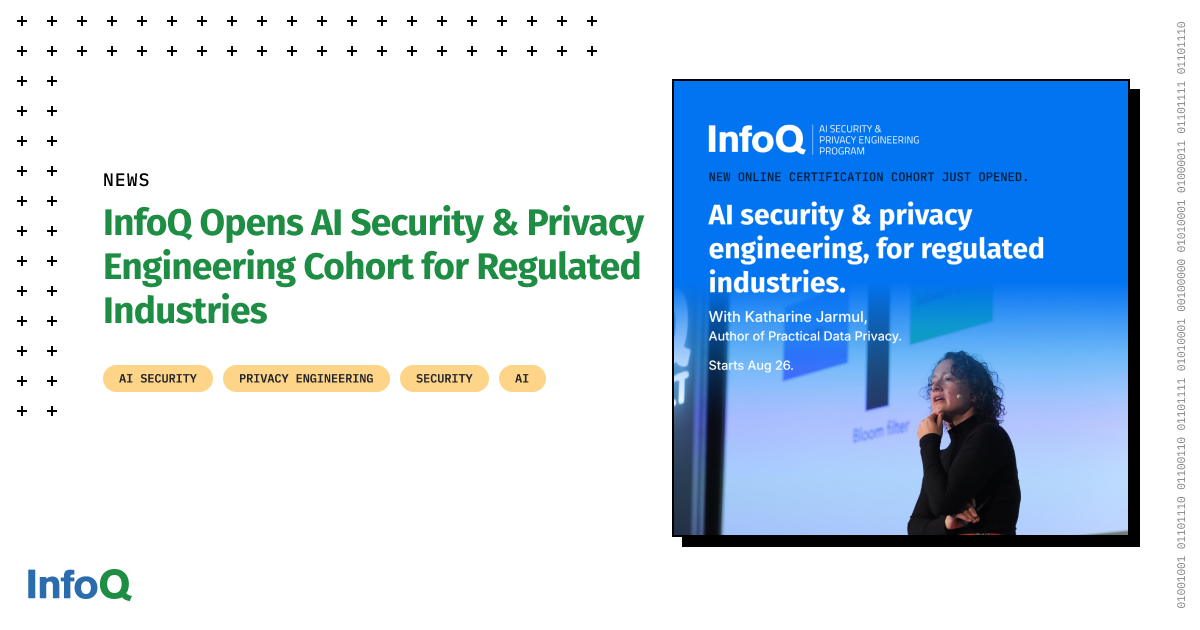
InfoQ has opened enrollment for the AI Security & Privacy Engineering Program, a five-week online cohort for senior engineers and architects responsible for security and privacy for AI systems in regulated industries. Two cohorts are scheduled, one starting August 26 and one starting October 14. Sessions run four hours a week and are facilitated by Katharine Jarmul.
The AI Security & Privacy Engineering Program is designed to provide senior engineers and architects with the knowledge and skills needed to secure and govern production AI systems. This is critical because AI security and privacy are key concerns for organizations in regulated industries. As AI systems become more prevalent, the risk of data breaches and other security threats increases. The program covers topics such as sensitive data, guardrails, evaluations, and audits.
Understanding AI Security Challenges in Regulated Industries
Regulated industries, such as healthcare and finance, face unique challenges for AI security. These industries are subject to strict regulations, such as the European Union's General Data Protection Regulation (GDPR) and the Health Insurance Portability and Accountability Act (HIPAA). Organizations in these industries must ensure that their AI systems comply with these regulations, or they may face significant fines and reputational damage. For instance, a data breach in a healthcare organization can result in the exposure of sensitive patient information, which can have severe consequences.
The AI Security & Privacy Engineering Program is designed to help organizations in regulated industries address these challenges. By providing senior engineers and architects with the knowledge and skills needed to secure and govern AI systems, the program helps organizations mitigate the risks associated with AI and ensure compliance with regulatory requirements. The program's focus on AI security makes it a valuable resource for organizations in regulated industries.
The Importance of AI Security and Privacy in Regulated Industries
AI security and privacy are critical concerns for organizations in regulated industries. The AI Security & Privacy Engineering Program is designed to help organizations mitigate these risks by providing their engineers and architects with the knowledge and skills needed to secure and govern AI systems. The program covers topics such as sensitive data, guardrails, evaluations, and audits, which are essential for ensuring the security and privacy of AI systems.
The program's emphasis on AI security and privacy is particularly important for organizations in regulated industries. These organizations must ensure that their AI systems are compliant with regulatory requirements, such as GDPR and HIPAA. The AI Security & Privacy Engineering Program provides senior engineers and architects with the knowledge and skills needed to ensure compliance with these regulations. By providing a comprehensive education in AI security and privacy, the program helps organizations mitigate the risks associated with AI and ensure the security and privacy of their AI systems.
Regulatory Requirements for AI Security and Privacy
Regulatory bodies are also taking notice of the importance of AI security and privacy. For example, the European Union's General Data Protection Regulation (GDPR) has strict guidelines for the use of personal data in AI systems. Organizations that fail to comply with these regulations can face significant fines and reputational damage. The AI Security & Privacy Engineering Program is designed to help organizations comply with these regulations. By providing senior engineers and architects with the knowledge and skills needed to secure and govern AI systems, the program helps organizations ensure that their AI systems are compliant with regulatory requirements.
Operational Consequences of AI Security Breaches
The operational consequences of a data breach or other security threat can be severe. Organizations can face financial losses, reputational damage, and legal liability. By providing a comprehensive education in AI security and privacy, the program helps organizations ensure the security and privacy of their AI systems and mitigate the risks associated with AI.
What to Watch Next in AI Security and Privacy
As AI advances, new security and privacy threats are expected to appear. Organizations must stay vigilant and continue to invest in the development of their engineers and architects. The AI Security & Privacy Engineering Program is an important step in this direction, providing a comprehensive education in AI security and privacy.
Future of AI Security and Privacy
The AI Security & Privacy Engineering Program is an important initiative that addresses the critical concerns of AI security and privacy. By providing senior engineers and architects with the knowledge and skills needed to secure and govern production AI systems, the program helps organizations mitigate the risks associated with AI and ensure compliance with regulatory requirements.
Best Practices for AI Security and Privacy
Organizations can follow multiple best practices to protect the security and privacy of their AI systems. These include implementing robust security measures, such as encryption and access controls, and ensuring that AI systems are transparent and explainable. The AI Security & Privacy Engineering Program covers these topics in detail, providing senior engineers and architects with the knowledge and skills needed to secure and govern AI systems. By following these best practices and providing a comprehensive education in AI security and privacy, organizations can ensure the security and privacy of their AI systems and mitigate the risks associated with AI.
Related Coverage
For more information on AI security and privacy, visit the following resources:
- AI Model Context Protocol Enhances Enterprise Security with Centralized Auth
- Vercel Introduces Eve for Building AI Agents
- Amazon Ends New Customer Sign-ups for Mechanical Turk
Explore More on This Topic
For more information on machine learning and AI security, visit the following resources: