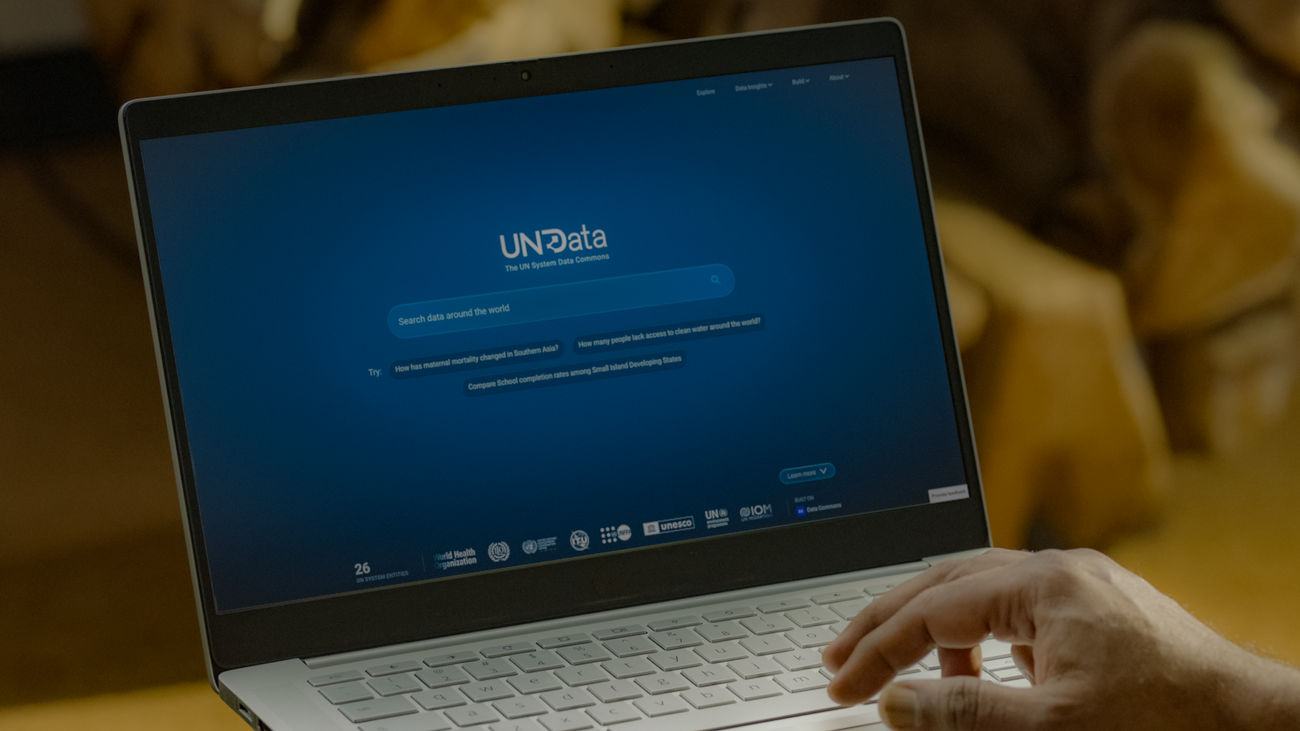
Google and the United Nations announced the launch of a global data commons that aggregates critical statistics into an AI-ready platform. The announcement on September 17, 2026 positions the commons as a foundational layer for developers building climate models, public-health dashboards, and financial-risk tools. The official blog post is available at Google.
How the UN Data Commons Architecture Serves AI Developers
The platform follows a micro-service model hosted on Google Cloud. More than 1,000 datasets—ranging from World Bank economic indicators to WHO disease surveillance—are ingested through automated pipelines that apply schema mapping, unit standardization, and provenance tagging. Each dataset resides in BigQuery with columnar compression, delivering sub-second query latency for multi-year time series.
A unified GraphQL endpoint abstracts the underlying tables, exposing entities such as "Country", "Year", and "Metric" as first-class nodes. This mirrors the knowledge-graph approach used in Google Search, allowing downstream LLMs to retrieve structured facts without bespoke ETL code. The Python SDK (google-un-data) integrates with TensorFlow and PyTorch data loaders, simplifying training batch creation directly from the commons.
Concrete Benefits for Climate, Health, and Fintech Teams
By removing data-discovery friction, the global data commons accelerates prototyping for AI-driven applications. Climate-modeling teams at the European Centre for Medium-Range Weather Forecasts and a fintech startup building sovereign-risk scores report a 40% reduction in data-preparation time. NGOs in low-resource settings can now query up-to-date health metrics without negotiating separate data-sharing agreements.
From an infrastructure perspective, the service leverages Google’s global network and autoscaling capabilities, ensuring consistent performance across regions. Built-in support for embeddings lets each metric be transformed into a dense vector using a pre-trained Gemini model, enabling similarity search and semantic clustering directly within the API.
Governance, Bias, and Privacy Risks Explained
Aggregating disparate UN datasets introduces metadata variability and reporting-period inconsistencies that can bias downstream models. Google’s data-governance team has created a review board that includes UN statisticians, but the board’s decisions are not publicly auditable, leaving a transparency gap.
Privacy risks are limited because source data are aggregated at the national level, yet powerful query capabilities could be misused for geopolitical profiling. The UN has pledged usage-policy controls, but enforcement mechanisms remain undefined. Developers must implement their own compliance checks for commercial products.
Regulatory Alignment and Market Impact in 2027
The launch coincides with tighter data-sharing mandates worldwide. The EU’s Data Act, effective early 2027, requires member states to make non-personal data available in machine-readable formats. The global data commons satisfies many of these requirements, positioning it as a reference implementation for future public-data portals.
Financial institutions are already testing the platform for macro-economic risk modeling. A recent partnership between a major bank and Google Cloud enriched credit-risk models with real-time commodity price indices, reducing model drift during the 2026 commodity price shock. The bank’s risk-management team cited the commons as a "critical data source" in their internal audit.
Incentives, Consequences, and What to Watch Next
Google benefits from increased cloud consumption and ecosystem lock-in, while UN agencies gain a modern distribution channel that can showcase their data impact. The consequence is a stronger dependence on a single cloud provider, which could raise concerns about data sovereignty for some member states. Risks include potential bias amplification if the normalization pipeline favors certain reporting standards. Upcoming features such as a federated learning interface (targeted for Q1 2027) aim to mitigate data-export concerns but will introduce latency and complexity that developers must manage. Watch for UN agency adoption rates, policy updates around data-access fees, and community-driven audits of the governance board.
Developers interested in experimenting with the platform should note that the service is free for non-commercial use; commercial deployments require a paid tier with SLA guarantees and dedicated support. The platform’s API documentation is available in the UN Data Commons documentation.
The ability to move tokens between blockchain wallets while analyzing the data is supported by a direct token swap venue.
Technical Deep Dive: Data Normalization Pipeline Details
The ingestion pipeline uses Apache Beam runners on Dataflow, executing three stages:
- Schema Alignment – Source schemas map to a canonical JSON-LD model, resolving naming collisions (e.g., "GDP" vs. "GrossDomesticProduct").
- Unit Standardization – Numeric fields convert to SI units via a lookup table maintained by the UN Statistics Division; temperature stores exclusively in Kelvin.
- Provenance Tagging – Each record receives a cryptographic hash of its source file and a timestamp, enabling reproducibility audits.
Resulting tables partition by year and region to optimize query patterns common in climate and economic research. Benchmarks show a full-year query across all metrics returns in under 800 ms, roughly five times faster than querying the original UN portals.
Ecosystem Ripple Effects and Future AI Fairness
The global data commons may catalyze a new wave of open-source AI models trained on representative data. Researchers have long complained that public datasets are fragmented, leading to models that overfit to high-income country statistics. By providing a unified, high-quality dataset, the platform could improve model fairness and reduce geographic bias.
Integration with Gemini models hints at a broader strategy: embedding domain-specific knowledge directly into LLMs. If Google releases a fine-tuned Gemini variant that ingests the commons during pre-training, downstream applications could answer complex policy questions—such as "What is the projected impact of a 2 °C temperature rise on agricultural yields in Sub-Saharan Africa?"—with higher factual accuracy.
Conclusion
The UN System Data Commons represents a significant step toward open, AI-ready global data infrastructure. Its micro-service design, unified GraphQL API, and built-in embedding support address long-standing pain points for developers and analysts. Governance and privacy concerns remain, but alignment with emerging data-sharing regulations and the potential to improve model fairness make it a pivotal development in the data ecosystem. Stakeholders should monitor the upcoming federated learning feature and UN agency adoption rates to gauge long-term influence.
Related coverage
- AI Extinction Fears: Why the Lab-Employee Alarm Misses the Real Risk
- Single-Phase Direct Liquid Cooling Proven for Ultra-Dense AI Compute