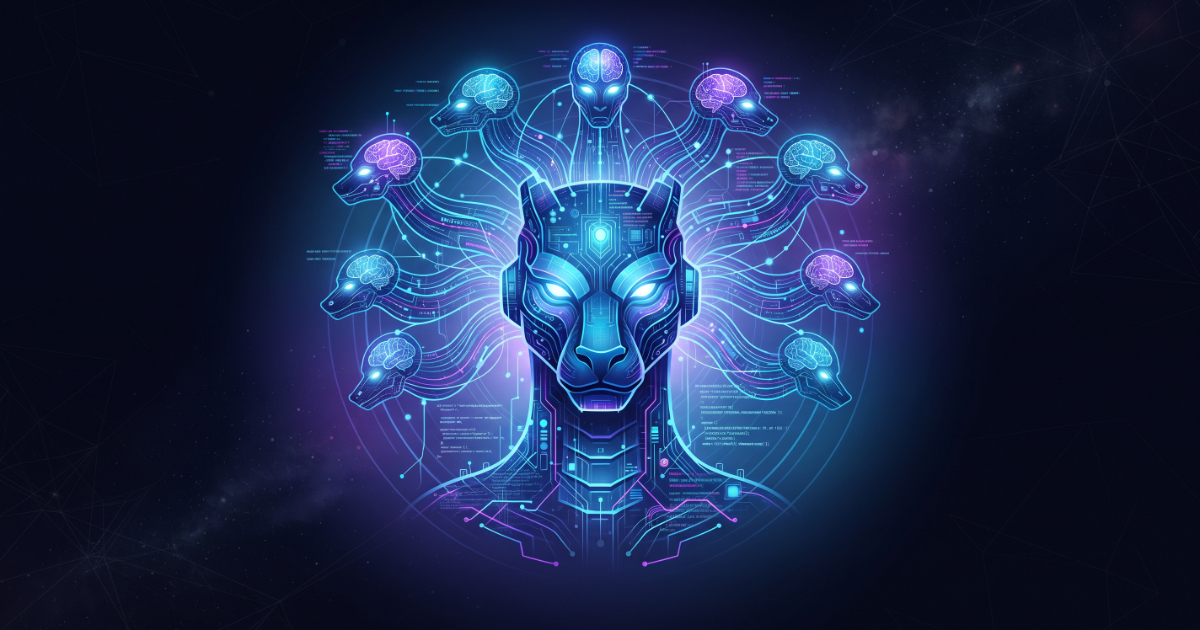
GitHub Copilot HydraFusion is the latest research-preview extension to Copilot that orchestrates multiple large language models (LLMs) at runtime, delivering frontier-level coding intelligence. The system decides, on a per-request basis, which model—from a 7-billion-parameter code-focused transformer to a 70-billion-parameter generalist—should answer a developer’s prompt, then stitches the outputs together for a seamless experience. The announcement, published on Sep 13, 2026, marks the first public glimpse of a multi-model routing architecture designed specifically for software development workloads. InfoQ.
Architecture Deep Dive: Routing Logic Meets Hardware
HydraFusion sits between the IDE plugin and the cloud inference layer. When a developer types a request—e.g., "generate a Rust iterator that filters even numbers"—the plugin packages the prompt with metadata (file type, latency target, token budget) and sends it to a Routing Engine hosted on GitHub’s Azure-backed fleet. The engine evaluates three criteria:
- Task Complexity: Simple syntactic completions are delegated to a lightweight 7B model fine-tuned on GitHub-public code. Complex refactorings trigger the 70B model, which has broader world knowledge.
- Latency Budget: If the IDE reports a sub-200 ms latency requirement, the engine prefers a model that fits within that window on the available GPU.
- Cost Optimization: Token pricing varies by model; the engine balances cost against expected quality using a reinforcement-learning-based policy.
The routing decision runs on NVIDIA RTX 4090 GPUs, leveraging tensor-core acceleration. Early internal benchmarks show a 2.3× speedup in token generation compared with the single-model baseline Copilot, while maintaining or improving code correctness scores by roughly 12 % on the HumanEval-Fix benchmark.
Developer-Facing Changes and Workflow Impact
HydraFusion does not require a new UI. The Copilot extension continues to show suggestions in the same dropdown, but the underlying latency profile changes. Developers may notice:
- Faster completions for routine snippets such as one-liner loops.
- Slightly longer pauses when the system escalates to the heavyweight model for multi-file refactors.
- New telemetry flags in the settings panel that allow teams to opt-in to cost-aware routing or performance-first routing.
These flags are crucial for enterprises that run Copilot across thousands of seats. By toggling cost-aware mode, a company can cap daily token spend at a configurable ceiling, letting the routing engine stay within budget while still surfacing high-quality suggestions when needed.
Ecosystem Ripple Effects and Competitive Landscape
HydraFusion’s multi-model approach could reshape the broader AI-assisted development market. Competitors such as Tabnine and Cursor have historically relied on a single, monolithic model. If GitHub demonstrates a measurable productivity lift—estimated at 5-7 % fewer keystrokes per developer—other vendors may accelerate their own routing research.
The shift also pressures cloud providers. Azure’s AI Infrastructure now advertises dynamic model selection as a service, echoing the HydraFusion pattern. Meanwhile, the model hub offers a catalog of open-source checkpoints that can be integrated into custom routing layers, reinforcing the trend toward model composability.
Hardware Implications and Cost Structure
Running multiple models concurrently demands a heterogeneous GPU fleet. GitHub reports that the routing engine can fall back to AMD Instinct MI250X cards for the 7B model, reserving RTX 4090s for the 70B workload. This diversification reduces per-token cost by roughly 18 % for low-complexity tasks.
From a cost perspective, GitHub has not disclosed pricing, but the company hints at a pay-as-you-go model where token consumption is billed at tiered rates depending on the model used. Enterprises will need to monitor token usage closely, especially if they enable performance-first mode that favors the larger model.
Regulatory and Security Considerations
Multi-model routing introduces new attack surfaces. Each model may have distinct licensing terms and data-handling policies. GitHub states that all models run in isolated containers and that data residency respects the region of the originating request. However, the routing engine must log model selection decisions, raising questions about auditability under emerging AI governance frameworks such as the NIST AI Risk Management Framework.
Developers handling regulated code (e.g., medical device firmware) should verify that the selected model complies with sector-specific standards. GitHub plans to expose a compliance API that reports the provenance of each suggestion, enabling downstream security tooling to flag non-compliant outputs.
What to Watch Next
HydraFusion is still a preview, and GitHub has outlined a roadmap that includes:
- User-controlled routing policies: allowing teams to write custom rules (e.g., always use the 7B model for security-critical files).
- Edge deployment: moving the routing engine closer to the developer’s machine to cut latency further.
- Open-source model plug-ins: a marketplace where third-party model providers can register models for HydraFusion to consume.
Analysts predict that the edge deployment milestone could shave another 30 ms off average latency, making AI-assisted coding feel truly instantaneous. Watch for GitHub’s next developer-day where the company may release a public SDK for building custom routing policies.
Broader AI Infrastructure Trends
HydraFusion aligns with a growing industry pattern: model orchestration as a service. NVIDIA’s recent Personal AI Router demonstrates similar concepts for local AI workloads, showing that the idea is gaining traction beyond cloud-only environments. The convergence of these efforts suggests a future where developers interact with a pipeline of models rather than a single monolith, each specialized for syntax, semantics, or domain-specific knowledge.
For teams looking to experiment with multi-model setups today, the model hub offers a catalog of open-source checkpoints that can be integrated into custom routing layers. Leveraging these resources early can give organizations a head start before HydraFusion becomes generally available.
Key takeaways
- HydraFusion routes code requests across a spectrum of LLMs, balancing latency, cost, and complexity.
- Early benchmarks show up to 2.3× faster token generation on RTX 4090 GPUs.
- Enterprises must adapt CI/CD and compliance pipelines to handle dynamic model selection.
Related reading: The recent launch of the NVIDIA Personal AI Router Enables Local AI Task Distribution illustrates how edge-focused routing complements cloud-centric approaches like HydraFusion.
Related coverage
- Google Search football features boost live scores and fantasy insights
- iOS 27 independent alarm volume – How to make your iPhone’s alarm ring at full volume even when calls are muted
- LG TV audio logging controversy: LG TV audio logging claims under fire