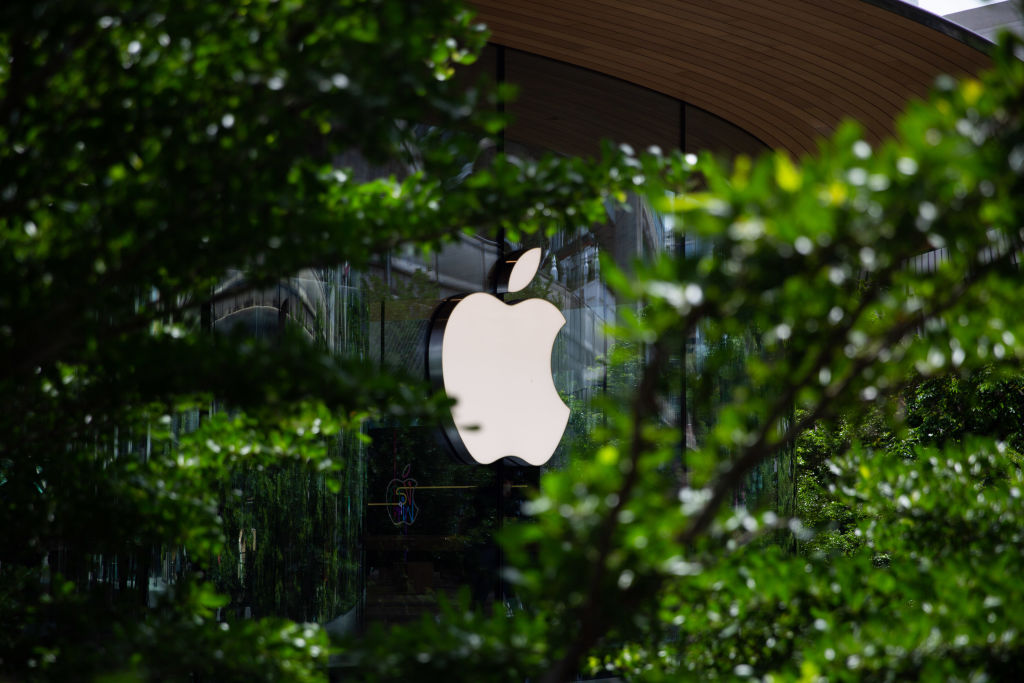
Ron Johnson, the architect of Apple’s flagship retail network, told TechCrunch on September 21, 2026 that AI-driven shopping agents will not eliminate the need for physical stores when consumers purchase high-value items such as laptops or smartphones. Johnson’s skepticism directly challenges the current wave of "agentic commerce" initiatives from Google, OpenAI, and other Silicon Valley firms, which are betting that AI can automate the entire purchase funnel from discovery to checkout.
1. The core claim: AI as a pre-store advisor, not a checkout substitute
Johnson’s interview makes a single, data-free assertion: "AI will never be able to have you physically experience a product" and therefore will serve only to inform shoppers before they step inside a store. He backs this with a concrete example – a $1,000-$2,000 laptop – stating that no consumer would hand over that decision to an autonomous agent. The claim aligns with recent observations that high-ticket e-commerce still suffers from elevated return rates, suggesting that tactile assessment remains a decisive factor.
2. Silicon Valley’s agentic commerce push
Google’s Universal Commerce Protocol (UCP) aims to standardize how AI agents retrieve product data, negotiate pricing, and trigger checkout flows across e-commerce sites. OpenAI has integrated product-search plugins into ChatGPT, allowing users to compare specs and, in limited cases, complete a purchase without leaving the chat window. Both efforts assume that the friction of moving from recommendation to transaction can be eliminated by a single conversational turn. Johnson’s counterpoint highlights a missing variable: the sensory and social cues that drive confidence in high-price decisions.
3. Apple’s retail DNA – people over pixels
When Johnson joined Apple in 2000, the company deliberately built stores as experiential hubs: glass façades, open layouts, and the now-iconic Genius Bar. The model emphasized human expertise; employees were salaried, not commission-driven, to remove sales pressure and focus on problem solving. Johnson’s new book, Shop Different: How Retail Revealed Apple’s Genius, documents how this philosophy created a feedback loop between product design and customer insight. Competitors that copied the aesthetic but not the staffing philosophy often failed to achieve comparable loyalty metrics.
4. Technical implications for AI agent design
If AI is to function as a pre-store advisor, its architecture must prioritize contextual relevance over transaction completion. Large language models (LLMs) such as GPT-4-Turbo, running on NVIDIA H100 GPUs, can generate personalized recommendation lists in under 200 ms, but they lack multimodal perception needed to evaluate tactile qualities. Future agents may need to integrate vision-language models (e.g., CLIP-based encoders) with haptic simulation data to approximate the “feel” of a device, a research direction still in its infancy. Moreover, latency constraints for real-time in-store assistance (sub-100 ms round-trip) will push edge-compute deployments, raising cost and privacy considerations.
5. Market impact – who wins and who loses?
Retailers that double-down on AI-only checkout experiences risk alienating customers in categories where sensory validation is critical. Luxury fashion, high-end audio, and professional-grade computing are likely to retain strong brick-and-mortar footprints. Conversely, fast-moving consumer goods (FMCG) and low-ticket items may see accelerated AI adoption, as the cost-benefit analysis tilts toward convenience. Johnson’s perspective suggests a bifurcated future: AI-enhanced discovery layers feeding into traditional stores for premium segments, while pure-digital pathways dominate commoditized markets.
6. Regulatory and privacy considerations
Agentic commerce platforms collect granular intent data – product views, price sensitivity, and even biometric cues from voice assistants. The European Union’s AI Act, expected to be enforced in 2027, classifies high-risk AI systems that influence purchasing decisions as requiring transparency and human-in-the-loop safeguards. Johnson’s argument that humans will remain the final decision-makers aligns with emerging regulatory expectations that AI should augment, not replace, consumer autonomy.
7. What to watch next
- Google UCP adoption metrics – early adopters will reveal whether merchants can meet the latency and data-privacy thresholds required for seamless agentic checkout.
- OpenAI’s shopping plugins – usage statistics for ChatGPT-based purchases will indicate consumer comfort with fully automated transactions.
- Apple’s next store iteration – any shift toward AI-driven in-store kiosks will test Johnson’s hypothesis in a controlled environment.
8. Sponsored insight
For readers interested in the broader implications of on-demand digital assets, an on-demand asset exchange offers a parallel to AI-mediated commerce by providing instant liquidity for tokenized assets.
An on-demand asset exchange (Sponsored)
9. Corroborating report
Engadget reported that Amazon blocked Meta’s Muse AI agent from shopping on its platform, underscoring the friction points when AI agents attempt to complete purchases without retailer consent. This incident supports Johnson’s claim that the ecosystem is not yet ready for fully autonomous checkout flows.
Amazon bars Meta’s Muse AI from shopping on its site
10. External reference on AI safety standards
The MIT Technology Review notes that responsible AI frameworks increasingly require human oversight for high-impact decisions, reinforcing the regulatory trend mentioned earlier.
In sum, Ron Johnson’s assessment provides a reality check for the AI-first retail narrative. While AI will undoubtedly sharpen product discovery and pre-purchase research, the tactile, social, and trust dimensions of high-value shopping appear resistant to full automation. Stakeholders should therefore design AI systems as advisory layers that funnel informed customers into physical locations, rather than as end-to-end checkout engines.
Related coverage
- ScrollEd launches AI-powered short-form textbook app at TechCrunch Disrupt
- Meta’s Muse AI Agent Blocked from Shopping on Amazon
- Meta’s Muse Beats ChatGPT Mobile Launch in First 12 Days